

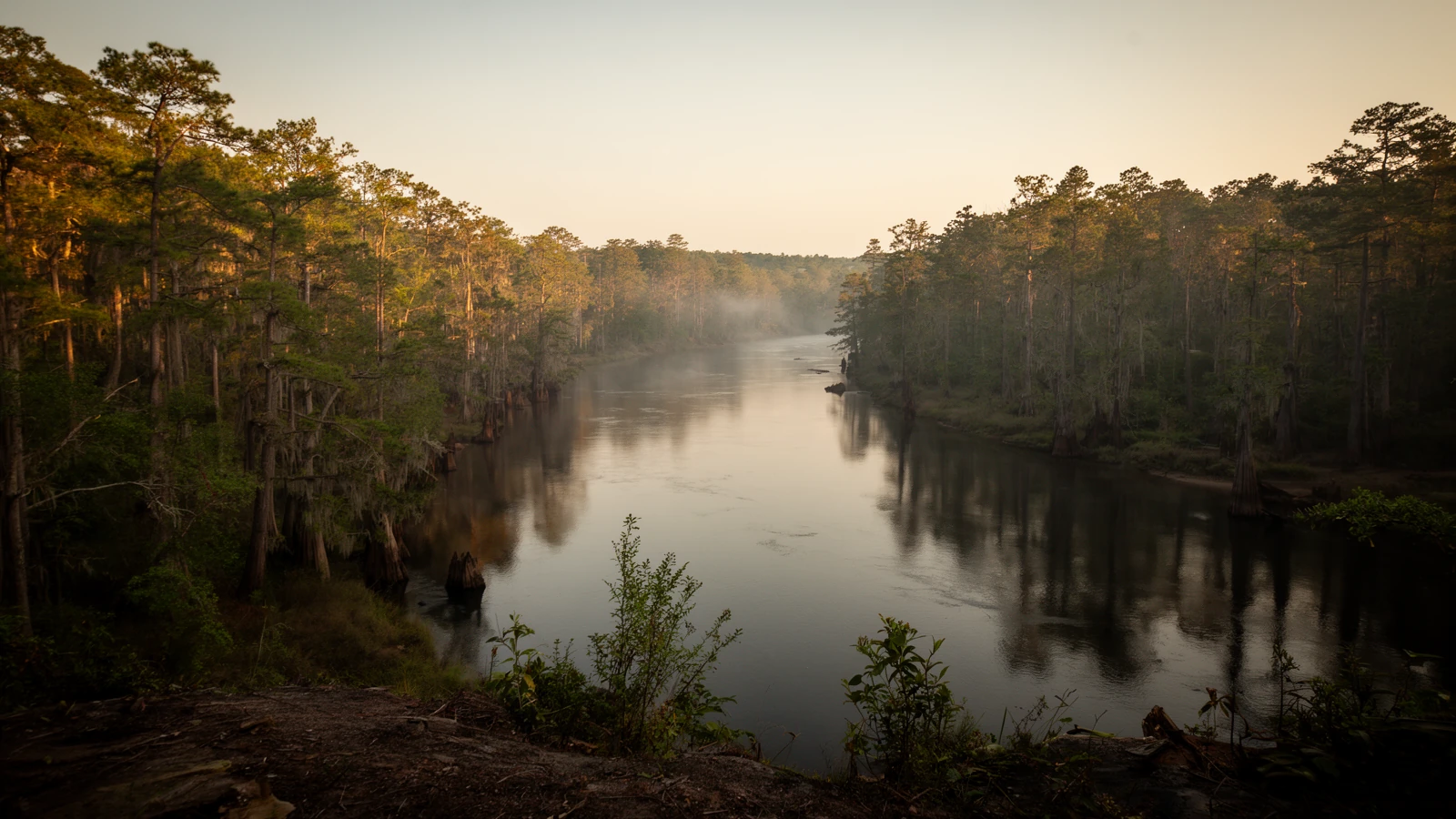
Martin County sits on a wide bend of the Roanoke River, where the coastal plain's blackwater swamps give way to the county's better-drained farmland. That river is the reason anyone settled here at all, the reason a Confederate fort was dug into a seventy-foot bluff above it, and the reason three of the county's oldest towns grew up directly on its banks rather than inland.
to 1774 Squhawky on the Roanoke
Before English settlement, the land that became Martin County was Tuscarora ground, and the site of what is now the county seat carried a Tuscarora name — Squhawky. NCpedia's own account states that the English colonists who began settling the area in the early eighteenth century displaced the Tuscarora who had lived along the river before them1. One secondary source places a village at the site as early as 1730, roughly half a century before the town there was formally incorporated — a detail worth noting rather than treating as settled fact, since it comes from a single local tourism history rather than a primary record.
The river shaped what English traders did with the place once they arrived. Wherever a landing could take on cargo, the coastal plain's tar, pitch and turpentine — the "naval stores" that waterproofed a wooden-hulled navy — moved through it downriver. What is now Williamston earned the working nickname Tar Landing for exactly that reason, well before it had an official town name at all.
1774 Martin County Formed
Martin County was established on March 14, 1774, carved from the southeastern part of Halifax County and the western part of Tyrrell County2 — residents on the far edges of both counties had simply been too far from either courthouse for routine business, and a new county solved that directly. It was named for Josiah Martin, North Carolina's ninth and final royal governor, who had taken office in 1771. The name did not age well for the man it honored: within a year of the county's founding, a Whig crowd forced him out of the Governor's Palace in New Bern in April 1775, and by that July he had fled the burning ruins of Fort Johnston for a British warship, governing what little he still could from offshore until the Revolution ended his authority for good3. Unlike Dobbs and Tryon Counties — two other royal-governor namesakes North Carolina renamed after independence — Martin County kept its name. Nobody bothered to rename a rural county after a governor nobody much liked to begin with; it simply outlasted him.
Nobody bothered to rename a rural county after a governor nobody much liked to begin with; it simply outlasted him.
1779–1804 Williamston, Jamesville & Hamilton
The county's three oldest towns are all river towns, incorporated within a generation of each other and all dependent on the same stretch of the Roanoke for their trade. Williamston, the county seat, was incorporated in 1779 at the site formerly called Squhawky and Tar Landing4. Who exactly it was named for is genuinely unsettled in the record — one local history credits "Dick" Williams, an Irish weaver who arrived with almost nothing and built real wealth; another credits Colonel William Williams, from a large plantation-owning family that included the county's first state senator; a third account names a different military commander of the same surname active during the Revolution. All three tell essentially the same story — a Williams family figure of some standing — without agreeing on which one. This page states that plainly rather than picking a version.
Jamesville, six years younger, took the longer path to its current name. Incorporated in 1785 as James Town, it became Jamestown in 1797, and only settled on Jamesville on February 10, 18555 — three names in seventy years before the current one stuck. Hamilton followed in 1804, incorporated originally as Milton before being renamed for Alexander Hamilton, the former U.S. Secretary of the Treasury6.
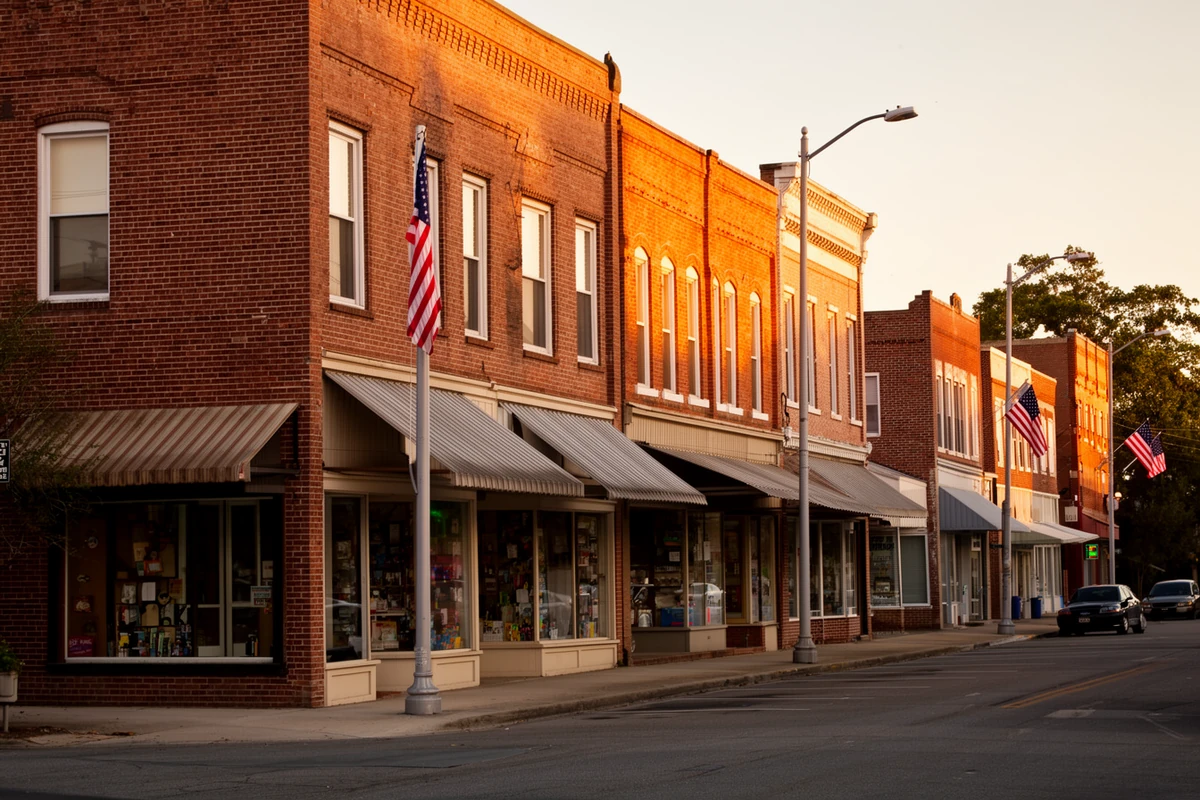
All three towns ran on the same economy: shallow-draft steamboats, cotton gins and a growing textile trade brought river traffic to its peak in the years just before the Civil War. Williamston's own historic district — 368 contributing buildings across 145 acres, listed on the National Register in 2001 — and Hamilton's separate district — 60 contributing buildings listed in 1980 — both date substantially from that same steamboat-era prosperity, Federal and Greek Revival architecture standing on streets laid out when a shallow-draft boat, not a highway, was how goods and people actually arrived7. Asa Biggs, born in Williamston in 1811, practiced law there before becoming a U.S. Senator and, later, a federal judge — his house is separately listed on the National Register8.
1862–1865 Fort Branch & the War
The same river that built the county's prosperity made it a Civil War target. In 1862 the Confederate government ordered earthworks built on a seventy-foot bluff at Rainbow Bend, about three miles south of Hamilton, to protect the Weldon Railroad bridge from Union gunboats moving up the Roanoke. An initial 1862 effort was judged inadequate on inspection; the fort was rebuilt through the winter and completed in February 1863, named Fort Branch for General Lawrence O'Bryan Branch, a North Carolinian killed at Antietam. Its garrison — companies of the 1st North Carolina Artillery — protected more than the railroad: Fort Branch also stood guard over the Confederate ironclad CSS Albemarle, then under construction a short distance downriver at Edwards Ferry9.
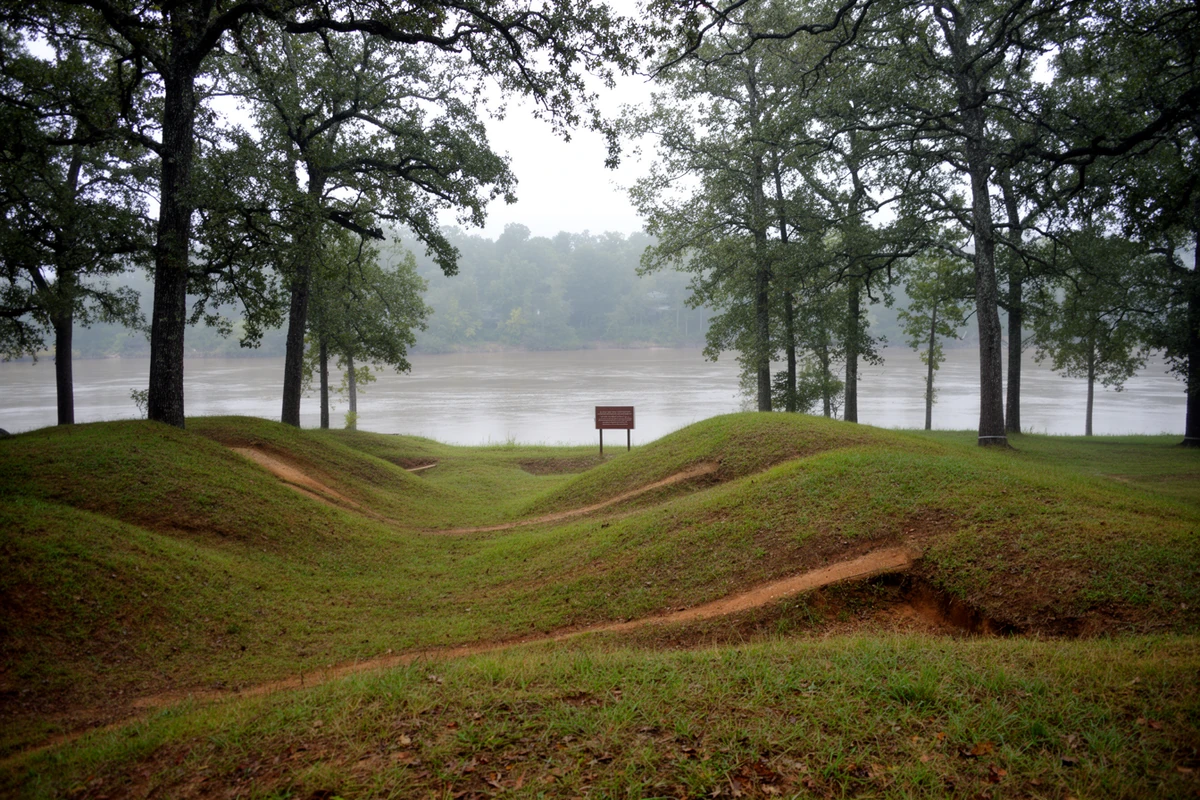
The fort was tested only once, directly. In mid-December 1864, a joint Union army-navy force attacked: Colonel Jones Frankle's land force was turned back, and river torpedoes sank the gunboat USS Otsego and the tug Bazely while the fort's artillery and sharpshooters drove off the rest — the only time Fort Branch was actually attacked in force, and it held. It never fell to the enemy. When Confederate defeat became certain in the spring of 1865, its own garrison destroyed it: on April 10, 1865, the fort's guns — as many as fifteen — were pushed into the river and the magazine exploded before the last soldiers withdrew10.
It never fell to the enemy. When Confederate defeat became certain, its own garrison destroyed it.
Jamesville, downriver and directly between Union-held Plymouth and Confederate lines, paid a harder price than Hamilton or Williamston. The town was, by local historical accounts, virtually destroyed over the course of the war — only one antebellum building, the circa-1810 Burras House on West Main Street, is known to have survived it11.
1872–1900 Robersonville, Everetts & the Rails
The county's next generation of towns broke from the river entirely. Robersonville, incorporated February 16, 1872, and named for the Roberson family, was the first town in Martin County not sited on the Roanoke — it grew instead along a rail line, first called the Williamston and Tarboro Railroad, that reached completion in October 1882. The county's first tobacco market opened there on August 7, 1900, and at its peak was reportedly the largest tobacco market in the world under a single set of buyers12.
Everetts, incorporated in February 1891 a few miles down the same line, grew the same way, as a trading post for cotton, corn and eventually peanuts moving along the rails between Williamston and Robersonville. Simon Peter Everett's general store there, built around 1883, is the earliest general store building still standing in Martin County; the town's historic district — 84 contributing buildings dating from the 1870s through the 1950s — was added to the National Register in 201413. Where the river towns had been built on tar and cotton moving downstream by boat, the rail towns were built on tobacco and produce moving to warehouses by wagon and, later, truck — a genuinely different economy from the same county's older settlements, running on a different form of transportation entirely.
1963 The Freedom Rallies
In the summer of 1963, Williamston became one of eastern North Carolina's most sustained civil rights flashpoints. After learning of poor sanitation conditions in the town's Black neighborhoods, Martin Luther King Jr. sent organizer Golden Frinks — who had already led the Edenton Movement in neighboring Chowan County — to Williamston, where Frinks led the first march on the town hall on June 30, 1963. What followed became known as the Williamston Freedom Movement: nightly mass meetings at Green Memorial Church, a Disciples of Christ congregation founded in 1897 that served as the movement's organizing center, drew as many as 400 people, many of them children and teenagers, before marches into downtown aimed at the Watts Theater, the Shamrock restaurants and the S&V Food Store14. Local organizer Sarah Small worked alongside Frinks throughout. Accounts differ on exactly how many consecutive days the protests ran — 29 by one count, 32 by another — a small discrepancy this page states rather than resolves.
State troopers, local deputies, and an active Ku Klux Klan presence met the marches. Town officials gradually desegregated some public facilities, though not the schools, and a boycott of local businesses proved short-lived; the movement's momentum largely folded into the national Civil Rights Act of 1964, which made much of the local fight moot by federal law.
Nightly mass meetings at Green Memorial Church drew as many as 400 people, many of them children and teenagers, before marches into downtown.
Present Martin County Today
Martin County counted 22,031 residents at the 2020 census, spread across 456 square miles and nine incorporated towns, with Williamston — home to roughly 5,200 of them — still the county seat and the largest15. The river towns and the rail towns both still stand, each carrying the shape of the economy that built it: Williamston's and Hamilton's National Register districts on their steamboat-era streets, Everetts' on its rail-corridor grid, Robersonville still oriented to the tobacco warehouses that made it the county's commercial center for most of the twentieth century. Fort Branch, restored and privately maintained, still sits on its bluff above the Roanoke, open to the public rather than fenced off as a ruin. None of it is museum-piece history — it is the actual streets, courthouses and farmland buyers are looking at today, on the same river that built all of it in the first place.
Primary Sources & Further Reading
The State Library of North Carolina's encyclopedia project. Source for the county's 1774 formation, the Josiah Martin naming, the Tuscarora Squhawky name, and the 1963 Williamston Freedom Rallies (NCpedia's own dedicated entry on that event).
The fort's own preservation organization, source for its construction timeline, garrison, the December 1864 attack, and its April 1865 destruction — cross-checked against the NC Dept. of Natural & Cultural Resources' highway historical marker documentation.
NC State Historic Preservation Office
National Register of Historic Places documentation for Martin County's historic districts (Williamston, Hamilton, Everetts) and the separately listed Asa Biggs House, as maintained in the Wikipedia-indexed NRHP listings and cross-checked against SHPO's own published records.
Local town & chamber histories
The Town of Jamesville, the Martin County Chamber of Commerce, and Roanoke River Partners, for town-founding and name-change details not covered in the sources above — Jamesville's James Town→Jamestown→Jamesville sequence and Hamilton's original name of Milton, specifically.
Sources consulted for this page include NCpedia (the State Library of North Carolina's peer-reviewed encyclopedia project), Wikipedia's maintained National Register of Historic Places listings (cross-checked against NC SHPO's own published records where a specific claim required it), the Fort Branch Civil War Site's own published construction timeline, the NC Dept. of Natural & Cultural Resources' historical marker program, and town-level histories from the Town of Jamesville, the Martin County Chamber of Commerce and Roanoke River Partners. Wikipedia was also used to cross-check dates and for the sameAs identifiers in this page's structured data, never as the sole source for a specific factual claim. Numbered citations for specific claims appear below. Where sources genuinely disagree — Williamston's exact namesake, and the Freedom Rallies' exact duration — this page says so rather than picking a version silently. Dates and figures are verified against these sources; nothing here is estimated or invented.
- The Tuscarora name Squhawky for the site that became Williamston, and the English settlement that displaced the Tuscarora inhabitants of the region beginning in the early 1700s, per NCpedia's geography entry. NCpedia, "Martin County," ncpedia.org/geography/martin. ↩
- Martin County's formation on March 14, 1774, from the southeastern part of Halifax County and the western part of Tyrrell County, per North Carolina History Project and cross-checked against Wikipedia's maintained county-formation summary. North Carolina History Project, "Martin County (1774)," northcarolinahistory.org/encyclopedia/martin-county-1774. ↩
- Martin County named for Josiah Martin, North Carolina's ninth and final royal governor (in office 1771–1776); his April 1775 removal from the Governor's Palace in New Bern and July 1775 flight from Fort Johnston, per Wikipedia's biographical entry on Martin. en.wikipedia.org/wiki/Josiah_Martin. ↩
- Williamston's 1779 incorporation at the former Squhawky/Tar Landing site, and the three competing accounts of its namesake (an Irish weaver named "Dick" Williams; Colonel William Williams of a plantation-owning family; a Revolutionary-era military commander of the same surname), per NCpedia (as above), a regional history published at albemarle-nc.com, and Wikipedia's entry on Williamston. en.wikipedia.org/wiki/Williamston,_North_Carolina. ↩
- Jamesville's 1785 incorporation as James Town, its 1797 renaming to Jamestown, and its final renaming to Jamesville on February 10, 1855, per the Martin County Chamber of Commerce's town history. Martin County Chamber of Commerce, "Jamesville," martinncchamber.com/jamesville. ↩
- Hamilton's 1804 incorporation as Milton and its renaming for Alexander Hamilton, per Roanoke River Partners' community history. Roanoke River Partners, "Hamilton," roanokeriverpartners.org/our-communities/hamilton. ↩
- Williamston Historic District (368 contributing buildings, 145 acres, listed October 12, 2001) and Hamilton Historic District (60 contributing buildings, listed June 3, 1980), per Wikipedia's maintained National Register of Historic Places entries, cross-checked against NC SHPO's published listings. en.wikipedia.org/wiki/Williamston_Historic_District. ↩
- Asa Biggs (born Williamston, 1811; U.S. Senator 1855–1858; federal judge 1858–1861), and his Williamston house's separate 1979 National Register listing, per Wikipedia's biographical entry. en.wikipedia.org/wiki/Asa_Biggs. ↩
- Fort Branch's construction (an inadequate 1862 effort, rebuilt and completed February 1863, named for General Lawrence O'Bryan Branch), its garrison (companies of the 1st North Carolina Artillery), and its dual role protecting the Weldon Railroad bridge and the CSS Albemarle's construction at Edwards Ferry, per the Fort Branch Civil War Site's own published construction history and the NC Dept. of Natural & Cultural Resources' historical marker documentation. Fort Branch Civil War Site, "Construction," fortbranchcivilwarsite.com/construction; NC DNCR, "Fort Branch (B-18)," dncr.nc.gov/blog/2023/12/05/fort-branch-b-18. ↩
- The December 1864 Union army-navy attack (Colonel Jones Frankle's repulsed land assault, river torpedoes sinking the gunboat USS Otsego and the tug Bazely) and the fort's April 10, 1865 evacuation and destruction by its own garrison, per the Fort Branch Civil War Site's published timeline. Fort Branch Civil War Site, "Timeline of Events," fortbranchcivilwarsite.com/timeline-of-events. ↩
- Jamesville's near-total destruction during the Civil War and the survival of the circa-1810 Burras House as the town's sole antebellum building, per the Martin County Chamber of Commerce's town history (as above). ↩
- Robersonville's February 16, 1872 incorporation, its status as the first Martin County town not sited on the Roanoke River, the October 1882 completion of the Williamston and Tarboro Railroad, and the county's first tobacco market opening there August 7, 1900, per Wikipedia's entry on Robersonville. en.wikipedia.org/wiki/Robersonville,_North_Carolina. ↩
- Everetts' February 1891 incorporation, Simon Peter Everett's circa-1883 general store (the oldest surviving general store building in Martin County), and the Everetts Historic District (84 contributing buildings, 1870s–1950s, listed on the National Register December 2, 2014), per the Martin County Chamber of Commerce's town history and Wikipedia's entry on the Everetts Historic District. en.wikipedia.org/wiki/Everetts_Historic_District. ↩
- The Williamston Freedom Movement: Martin Luther King Jr.'s dispatch of organizer Golden Frinks (who had led the earlier Edenton Movement) to Williamston, Frinks' June 30, 1963 first march on the town hall, the rallies at Green Memorial Church (founded 1897) drawing an estimated 400 participants, the targeted businesses (Watts Theater, the Shamrock restaurants, S&V Food Store), organizer Sarah Small, the State Highway Patrol/Klan opposition, and the movement's duration (NCpedia states 32 days; Wikipedia's account of Frinks states 29), per NCpedia's dedicated entry and Wikipedia's biographical entry on Frinks. NCpedia, "Freedom Rallies: Williamston, N.C., 1963," ncpedia.org/freedom-rallies; Wikipedia, "Golden Frinks," en.wikipedia.org/wiki/Golden_Frinks. ↩
- Martin County's 2020 census population of 22,031 across 456 square miles of land, and Williamston's 2020 census population of 5,248, per Wikipedia's maintained census figures for Martin County and Williamston. en.wikipedia.org/wiki/Martin_County,_North_Carolina. ↩