
What 180 Gallons of Mull Says About a Small Town

In this post
The line at Bear Grass formed before eleven. The pot did not last much past it.
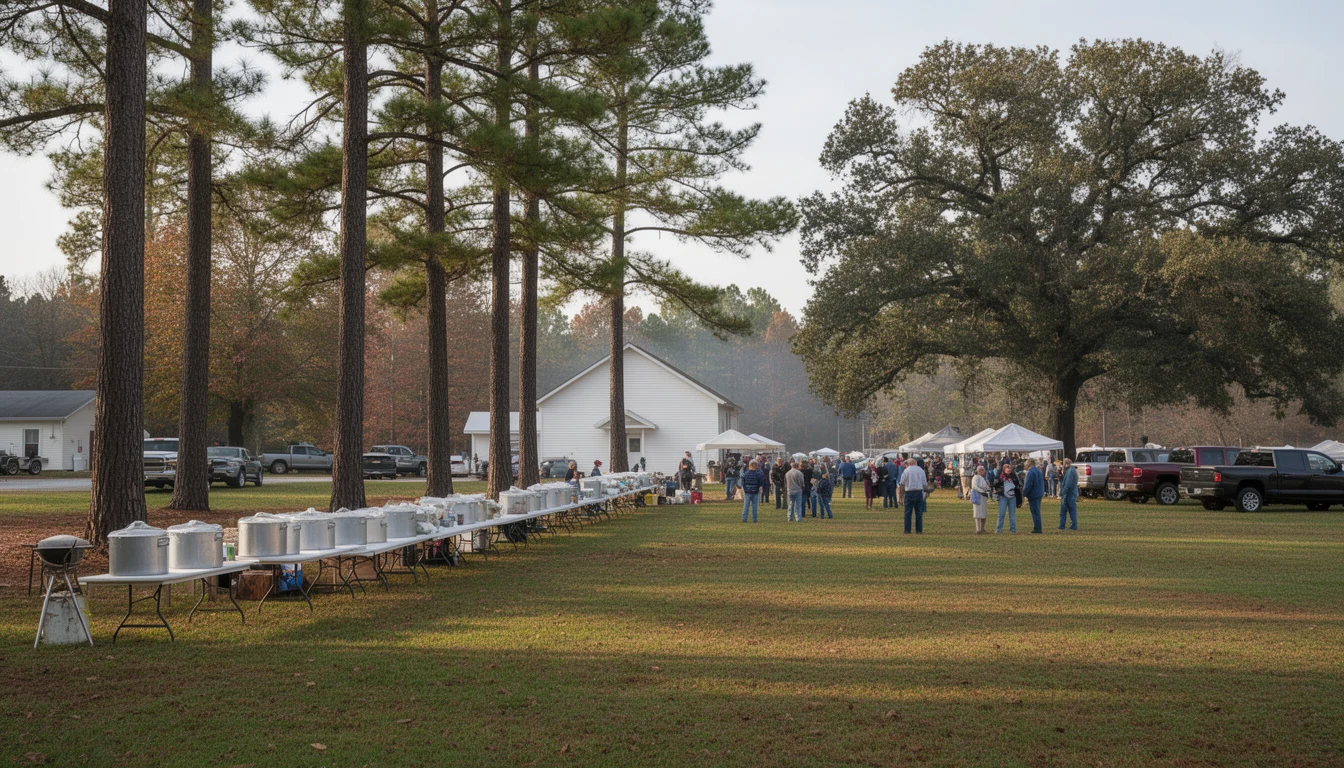
The thirteenth annual Chicken Mull Festival ran Saturday, October 24, from 9 a.m. to 4 p.m. at 6344 E. Bear Grass Road, on open ground in a Martin County town of 89 people. Organizers told WCTI12 that 180 gallons of chicken mull sold out in just over an hour, and that the crowd was the largest the festival has drawn.
What a sold-out pot actually takes
Chicken mull is a plain dish. Chicken, broth, crackers, seasoning, cooked down until it holds on a spoon. A cup cost $10 this year, with a limit of four cups a person, and the cap earned its keep.
The Bear Grass Fire Department cooked the chicken. Local volunteers pulled the meat from the bones, work that ran about five hours this year. The chicken and broth cooled and sat overnight, then went back on the heat the next morning with crackers and seasonings. Some visitors drove a long way and arrived after the last cup was gone.
Organizers said they may make more next year if attendance keeps climbing. A bigger batch is not a bigger pot. It is more hours of picking, more coolers, and more people standing in a field the night before.
Put the arithmetic on the table. Sixteen cups to the gallon makes 180 gallons about 2,880 eight-ounce cups. Held to the four-cup limit, that is no fewer than 720 people served in a little over an hour.
The vendors felt the same squeeze. Cricket and Laura of Bailey’s Famous Collards sold 92 pounds of collards, 49 pounds of cornmeal, and two and a half pots of beans and sausage. Nobody packs that much on a guess.
The part of a town a listing cannot show
Ask a builder what separates a town that works from one that is fading and the answer is rarely the housing stock. It is who shows up.
A town of 89 people cannot staff a county-wide feed on its own. The volunteers come from across Martin County, and they come because the event belongs to them. That habit of showing up is the same asset a downtown needs when a storefront goes empty or a corner lot gets rezoned.
For a buyer, this is the piece of due diligence that never appears on a listing sheet. Roof age is easy to price. A volunteer base is not, and it shapes what a town looks like ten years after you close.
Bear Grass itself has grown a little. The 2020 census counted 89 residents, up from 73 in 2010. Martin County counted 22,031.
Main Street is growing again in North Carolina
The numbers from the state program point the same direction. For fiscal year 2025-26, North Carolina’s 72 designated Main Street communities and eight designated Small Town Main Street communities reported $507,114,044 in downtown public and private investment, 2,393 new jobs, 308 new businesses, 276 building renovations, and 347 facade improvements.
They also logged 83,942 volunteer hours, which the state valued at $2,882,570.
Since the program started in North Carolina in 1980, designated Main Street and Small Town Main Street communities have drawn more than $6.6 billion in public and private investment. That work supported more than 8,700 building rehabilitations and a net gain of more than 8,800 businesses and nearly 42,000 jobs.
The scale is worth noting. Designated Main Street communities currently range in population from 1,435 to 115,053, and every one of them was under 50,000 when it was designated. Bear Grass, at 89 people, sits far below that floor. Williamston, at roughly five thousand, sits inside it, and Williamston Downtown, Inc. already works with the program on design, promotion, and economic restructuring.
Here is the part that ties the two stories together. Main Street money does not arrive by application alone. It arrives on volunteer hours, a director, and a board that keeps meeting. Last year that totaled 83,942 hours statewide. The mull feed runs on the same fuel.
The sprawl trade, stated plainly
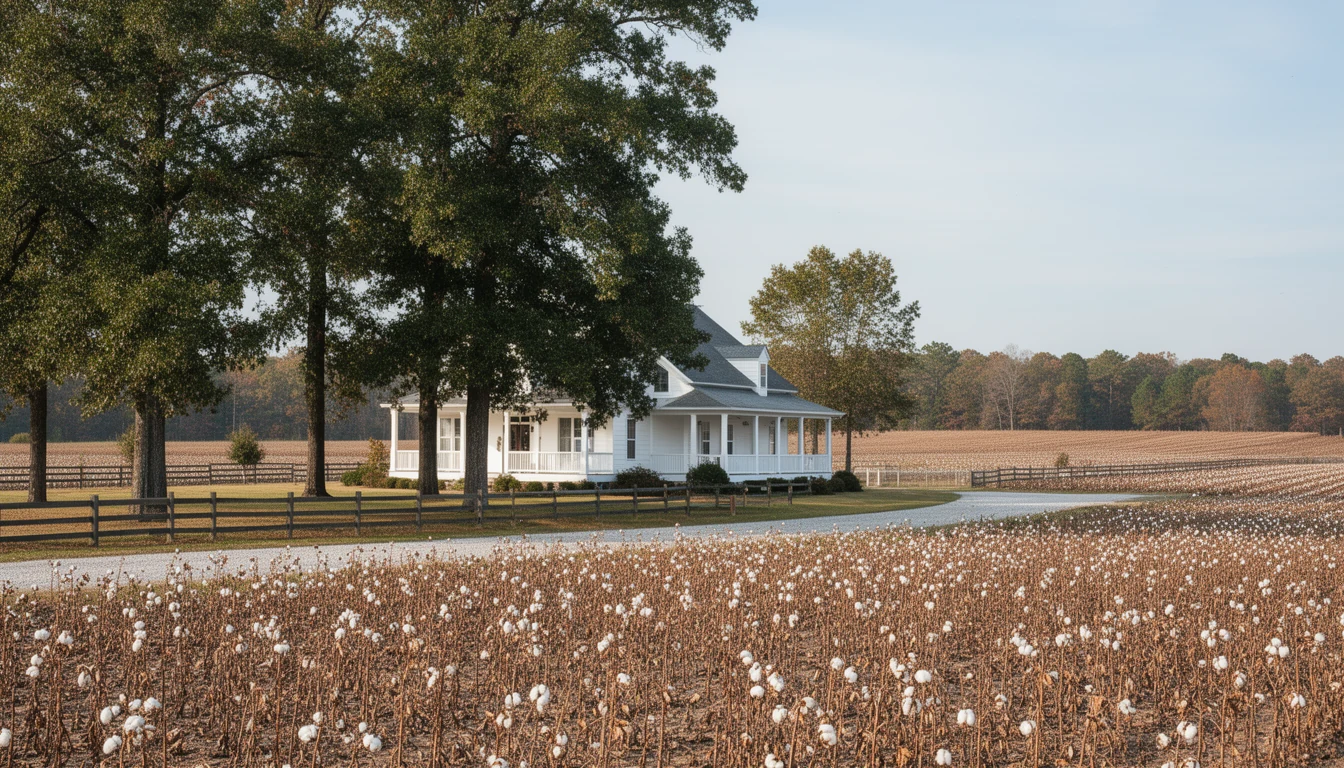
People leaving cities for small towns usually name three reasons. Land, price, and a shorter line at the school office. The reason underneath is often simpler: they want a place that still feels like a place.
Martin County can deliver that, and it asks something back. Errands get longer. The grocery run, the hardware run, and the trip to a doctor are drives, not walks. That is the trade, and it is not a small one for a household with two jobs.
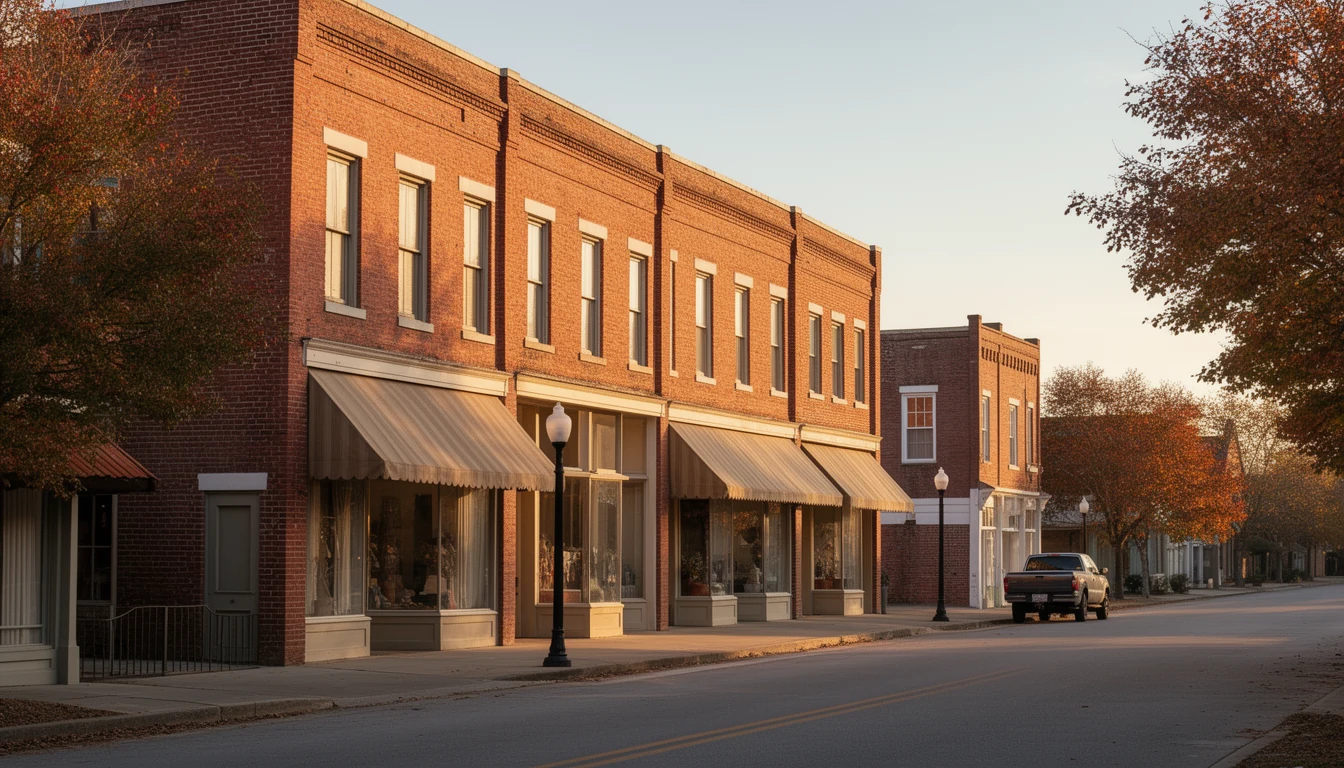
What softens the trade is a downtown that functions. A block of occupied brick buildings, a few places to eat, a feed where half the county stands in line together. Those are not decorations. They are the infrastructure that makes a rural address livable, and they are why the state counts volunteer hours as economic development.
Why the revitalization work keeps going
Main Street rehabilitation in North Carolina is not finished, and the current migration out of metro areas is the reason it will continue. As long as households keep trading square footage for land and a town they can walk in, the demand for a working downtown follows them. The state numbers for the last fiscal year describe that demand arriving in dollars and in hours.
Bear Grass offered its own evidence this month. The festival held an art contest for America’s 250th birthday, suggested and organized by Ana Mondragon, with winners named in four age groups from elementary school through adult. People who will paint a town’s history for a ribbon are the same people who will stand over a pot for five hours.
The pot emptied in about an hour. The next one gets poured on Saturday, October 23, 2027. Bring a chair, and get in line before eleven.
Keep reading
Williamston's Main Street: A Tobacco Town's Second Act
Williamston's commercial historic district holds 31 buildings from the tobacco years. What those blocks mean for anyone buying a house in town.
Slow Growth by Choice: What Martin County Offers Buyers
Martin County grows on purpose. What buyers priced out of metro NC get: crossroads access, real employers, horse ground, and the honest trade-offs.
5 Martin County Rail Towns: Then and Now
Five Martin County rail towns: Robersonville, Everetts, Parmele, Williamston, and Hamilton, what the tracks left behind, and what living there takes today.