
Williamston's Main Street: A Tobacco Town's Second Act

In this post
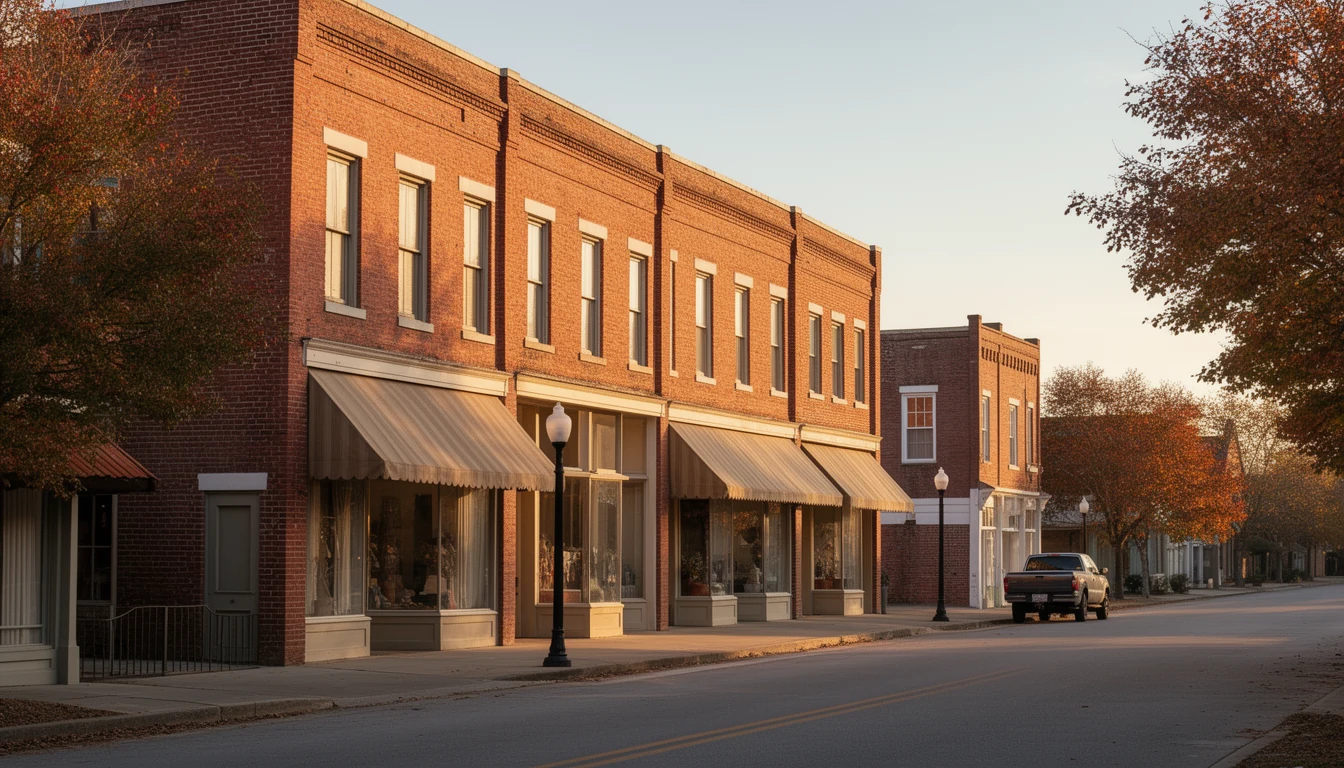
The light comes down West Main a little before six in October and the brick across from the courthouse goes orange. A truck idles outside Chicken Kitchen at 503 West Main, and the smell of fry oil and coffee reaches half a block. Two women stop in the crosswalk to finish a sentence. Then the street goes quiet again, the way it does most evenings now.
The street the warehouses paid for
Main Street is the only east-west street through downtown, and for most of a century it was the county’s front porch. The money behind those storefronts came from auction floors a few blocks southwest of here, in the tobacco center that grew up beside the tracks.
In the 1930s three warehouse companies worked that ground: the combined Roanoke-Dixie, the Farmers, and the Planters. The Carolina joined them in 1938. Growers from Martin and the counties around it hauled cured leaf in, buyers walked the rows, and the sidewalks on Main filled with people who had money in their pockets by two in the afternoon.
Then it moved. Between 1959 and 1961, in a stretch of three years, every warehouse company in that center relocated. Nobody tore the street down. It just lost the crowd it was built for.
What the 31 buildings actually are
The district was listed on the National Register of Historic Places on March 9, 1995, as the Williamston Commercial Historic District. It covers 11.5 acres and 31 contributing buildings, roughly the 100 blocks of East and West Main, the 100 block of South Smithwick, and the 200 block of Washington.
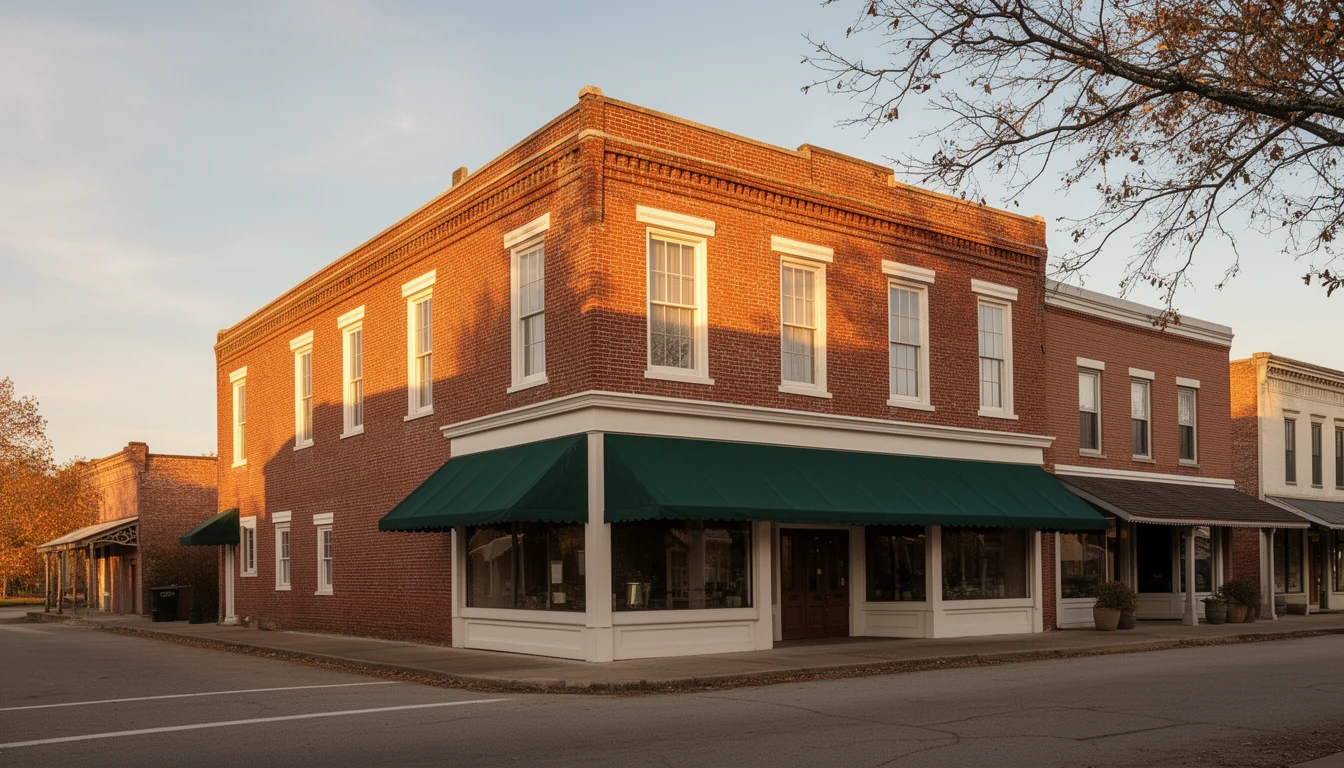
The styles run from Greek Revival through Colonial Revival and Romanesque Revival, with construction dates from the mid-1800s into the 1920s. The Docton W. Bagley Building, from about 1850, is the old survivor. The former People’s Bank dates to 1917. The Watts Theatre opened in 1929. The Tar Heel Apartments at 154 to 160 West Main went up in 1921 as the most ambitious commercial building in town, three stories of brick that still set the scale for everything around it.
Walk past the 1938 post office and look up inside when it’s open. Philip von Saltza painted the lobby mural, First Flight of the Wright Brothers at Kitty Hawk, in 1940 under the Works Progress Administration.
The second act is upstairs
The Tar Heel building already made the turn that most of Main Street still needs to make. Its upper floors hold apartments, which is the highest use those rooms have had since the auctioneers left.
That matters to a buyer for a plain reason. In a town of about five thousand people, the housing stock is mostly detached houses on numbered streets. Converted upper floors add something the county can’t build new: small units within walking distance of the courthouse and the post office.
There is help for the work. District properties may be eligible for state and federal rehabilitation tax credits, and the town points owners at the State Historic Preservation Office for the details. Williamston Downtown, Inc. runs alongside the North Carolina Main Street Program with committees on economic restructuring, design, and promotion, and business memberships carry facade grant eligibility.
Read the fine print on the credits, though. They generally reimburse qualified work after it’s done and after the review, so you carry the cost to the closing. A historic district also adds a review step to exterior changes, which is slower than a standard permit and not negotiable.
What the few blocks cost you
Thirty-one buildings is a small downtown. This is not a shopping district. Groceries and anything in a big box are out on the highway side of town, and downtown is lunch, antiques, offices, and the business of the county.
Vacant upper floors look cheap for a reason. Sprinklers, a second stair, window restoration, and a roof on a hundred-year-old building all land in the same budget. Before you price a rehab, find out whether the building contributes to the district and how many of its windows are original.
If a new build with a two-car garage is the plan, this street will fight you the whole way.
What to check before you sign
Ask the town whether the block is inside the district boundary, since the answer changes your permit path. Find out what the occupancy is next door. And ask Williamston Downtown, Inc. what facade money is available this year and who has used it.
Then walk the block at six in the evening. A downtown that holds people after the offices close is a different asset than one that empties at five, and you can see which one you’re buying in about ten minutes.
On a good October evening the light sits on that brick for maybe twenty minutes and the whole street looks like the photograph the town keeps using. It was laid out for a crowd that came by wagon and then by rail. The crowd is smaller now. The street is still the best address in Martin County.
Keep reading
Slow Growth by Choice: What Martin County Offers Buyers
Martin County grows on purpose. What buyers priced out of metro NC get: crossroads access, real employers, horse ground, and the honest trade-offs.
5 Martin County Rail Towns: Then and Now
Five Martin County rail towns: Robersonville, Everetts, Parmele, Williamston, and Hamilton, what the tracks left behind, and what living there takes today.
Jamesville's Herring Fishery: A River Economy Remembered
The herring run built Jamesville on the Roanoke River. The Cypress Grill is gone and the festival has ended, but the river's story still shapes this town.