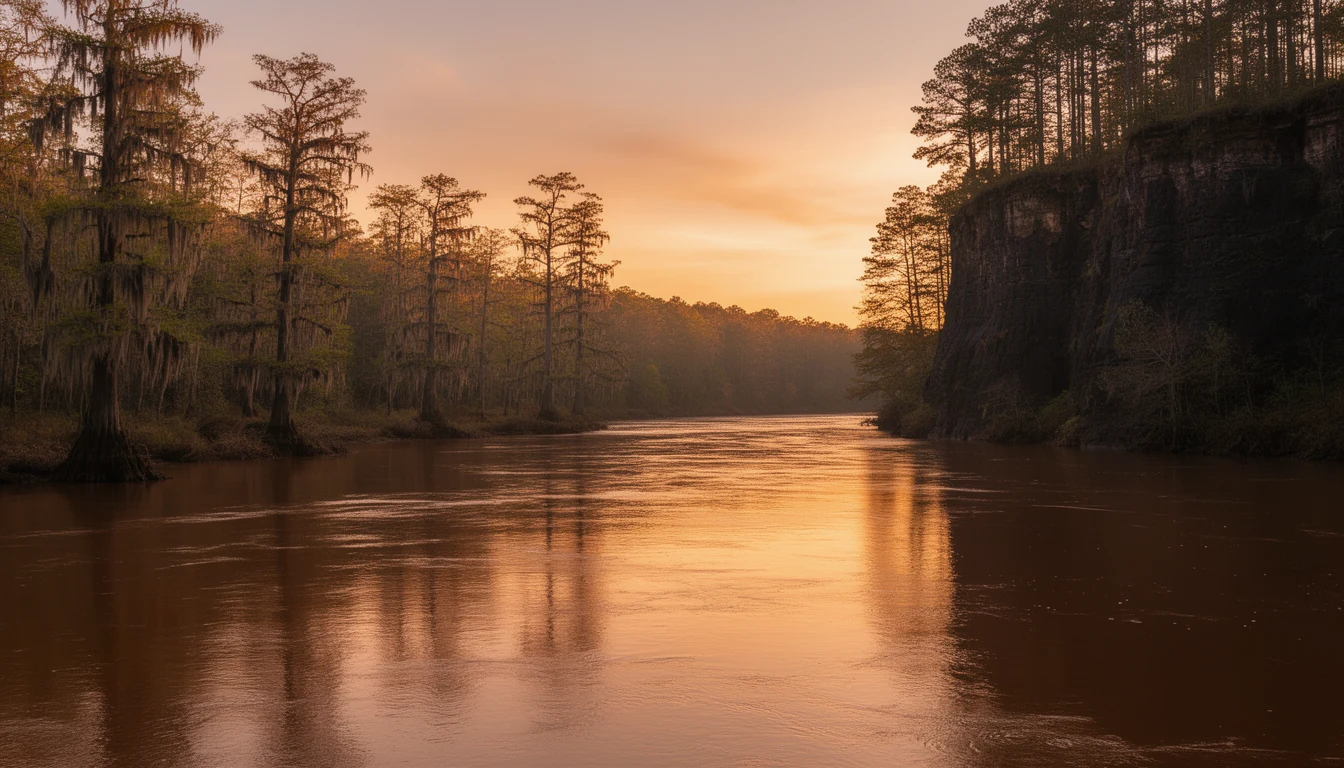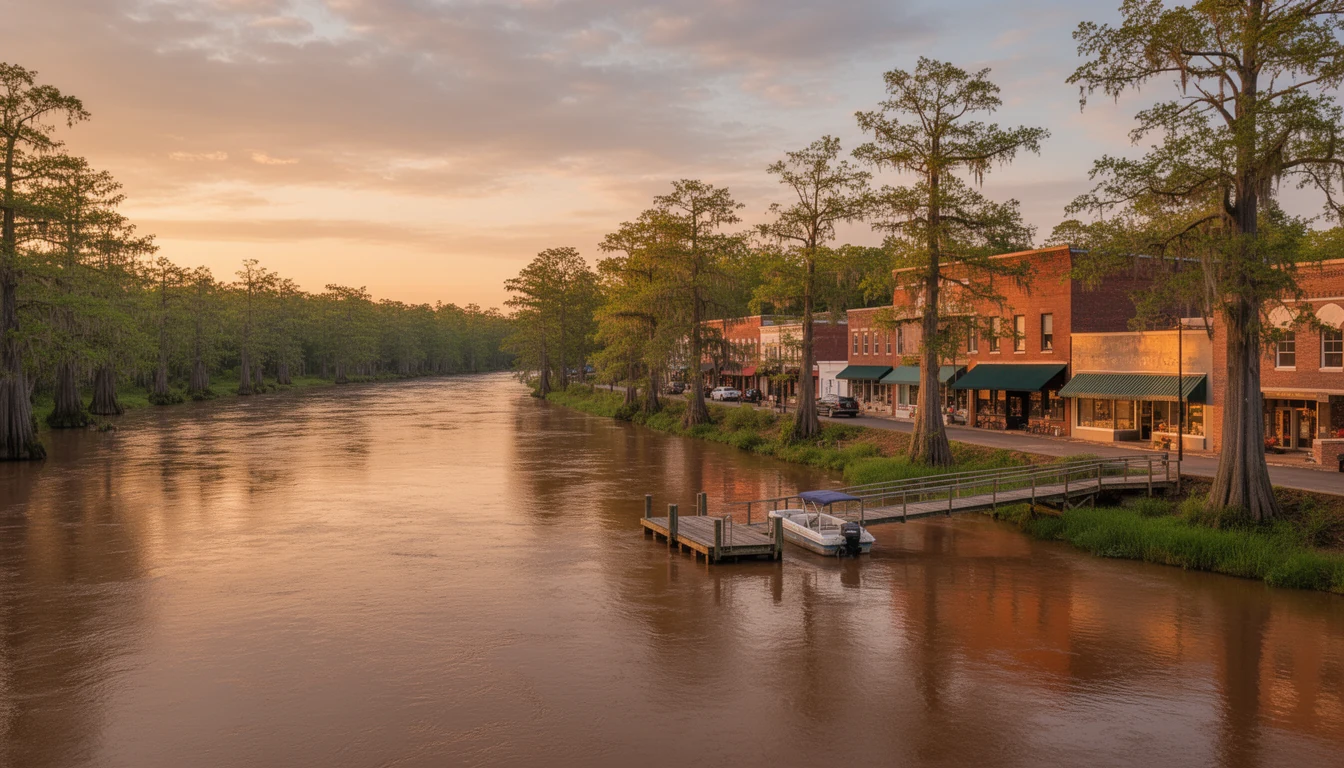


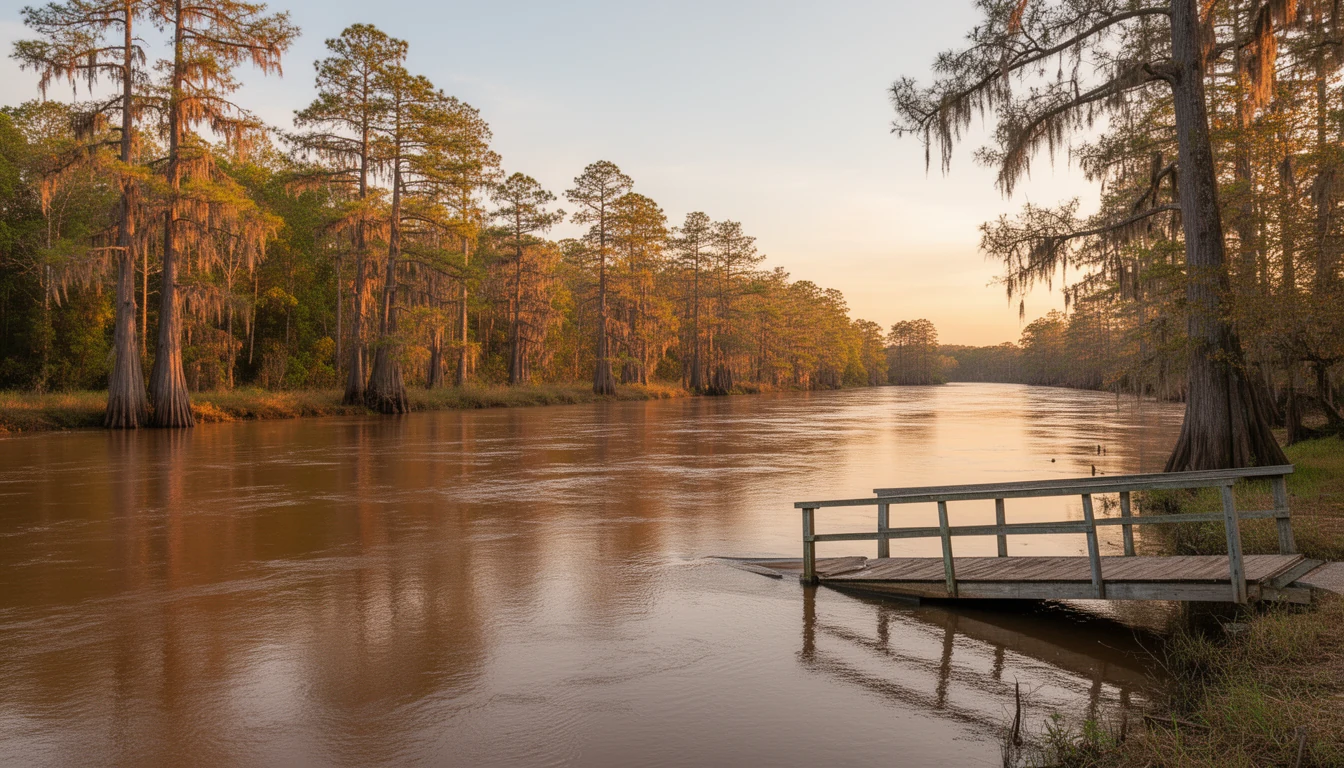
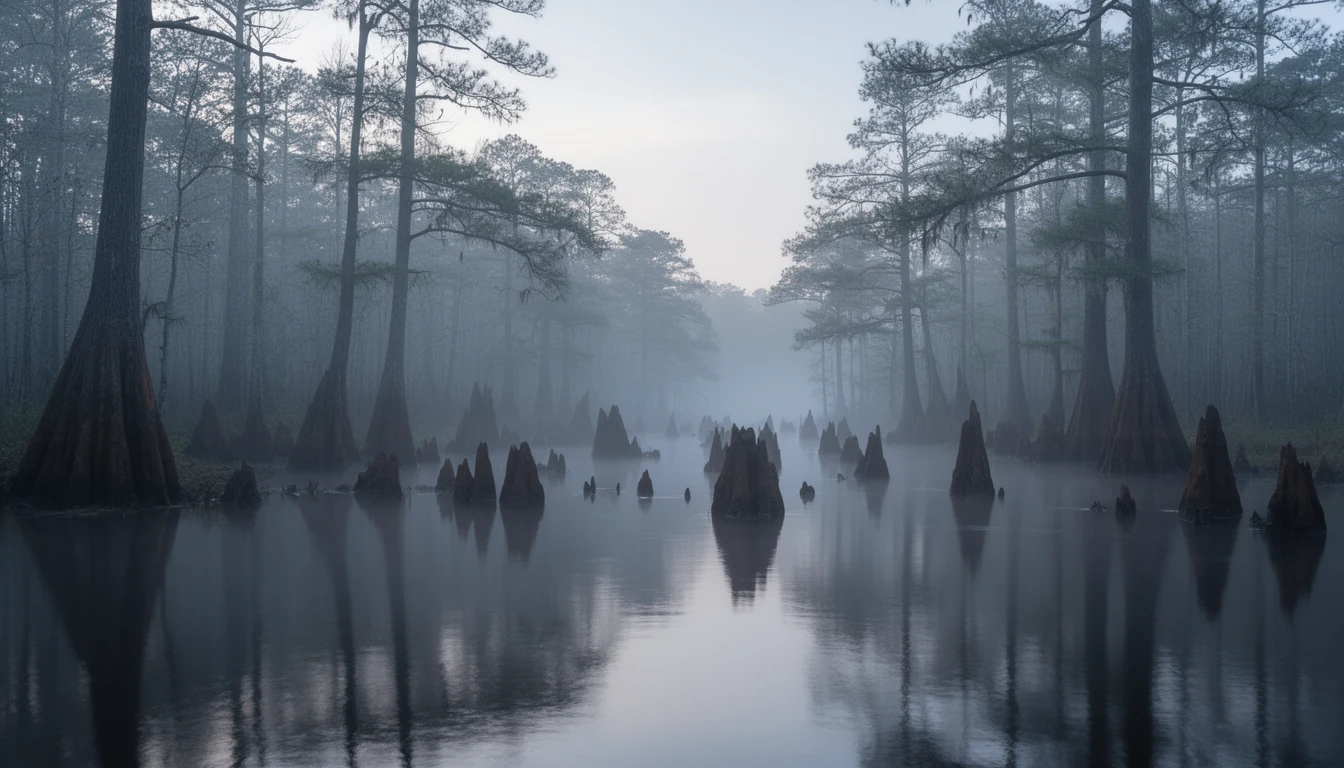
You park at the Astoria Landing boat ramp in Jamesville and the Roanoke River is running wide and tea-colored, the color of coffee with a lot of cream. A great blue heron lifts off the bank and works its way downriver past the cypress. This stretch of the river was not always this quiet. For the better part of two centuries, the spring herring run made Jamesville one of the busiest small towns in eastern North Carolina.
The Spring Run That Built a River Town
Jamesville is the second oldest town in Martin County, incorporated in 1785 as James Town and renamed Jamesville in 1855. It sits directly on the Roanoke, and the town’s calendar followed the fish. Every spring, river herring surged upriver to spawn, and by 1880 the Roanoke region’s fishery was landing tens of millions of fish a season. Fishermen cut and salted them by the hundreds of thousands, and the surplus went out as fertilizer.
The most successful operation in Martin County was the C.C. Fleming Fishery on Stewart Street, which still stands today as the only important structure tied to the fishing industry left in the county. Herring was cheap, plentiful protein in a poor farming region. Salted fish could show up at the table three times a day, and families stored them in smokehouses with lard and sausage hanging from the rafters.
The Cypress Grill: A Seasonal Shack on the River
The building that made the story famous was the Cypress Grill, a board-and-batten shack with a tin roof at the end of Stewart Street, where the road dead-ends at the boat ramp. It was built around 1936 as a fish camp, burned in 1946, and was quickly rebuilt. For decades it opened only from January through April, as long as the herring were running, and regulars ordered their fish “cremated”: fried so long the bones dissolved and you ate it like a corncob.
Up to 500 herring a day went through the fryers at the Grill’s peak. The Gardner family ran it for generations, and people drove from miles away for a plate of fish, hush puppies, and chocolate pie. In July 2018, the building burned again, this time a total loss. Investigators found no sign of arson, and an electrical or storm-related cause was likely. The Grill was not rebuilt.
What Happened to the Herring
The fish themselves were already in trouble before the fire. Dams, overfishing, and pollution cut the spawning runs to a fraction of their old size, and in 2006 North Carolina made it illegal to fish for river herring, even for recreation. Virginia followed in 2012. The fish are protected now, not harvested.
The Jamesville Herring Festival, held every Easter weekend since 1949, drew close to 6,000 visitors at its peak, about ten times the town’s population. North Carolina designated it the official state herring festival in 2011. The pandemic canceled it in 2020 and 2021, a volunteer shortage canceled 2022, a revival in 2023 struggled, and the festival came to an end in 2024.
What It Means for Buyers on the River Today
This is not a story with a happy ending, and that is the honest part of it. The Grill is ash. The festival is gone. The river no longer feeds the town the way it once did. What remains is a working riverfront with a real past, and that past is visible if you know where to look.
River’s Edge, Jamesville’s remaining riverfront restaurant, still serves herring plates, sourcing its fish from South Carolina, where river fishing is still legal. Astoria Landing is a free public ramp with trailer parking, and the paddle-in camping platforms of the Roanoke River Paddle Trail are a short paddle up Devil’s Gut. The Burras House, built around 1810, survives as the town’s only antebellum residence.
For a buyer, Jamesville offers a quieter, older version of the river town story: real history, public water access, and prices that do not pretend this is the coast. You are not buying into a festival. You are buying into a place that remembers one, and that memory is part of what gives the town its character.
The Bottom Line
The herring run built Jamesville, and then it ended. That is the trade: you get a riverfront town with a deep, specific history, a public ramp to one of the best paddle trails in the state, and none of the crowds the old festival used to draw. If you want to understand what you are actually buying along this stretch of the Roanoke, start by reading the history, then walk down to the water and see what the herring saw.