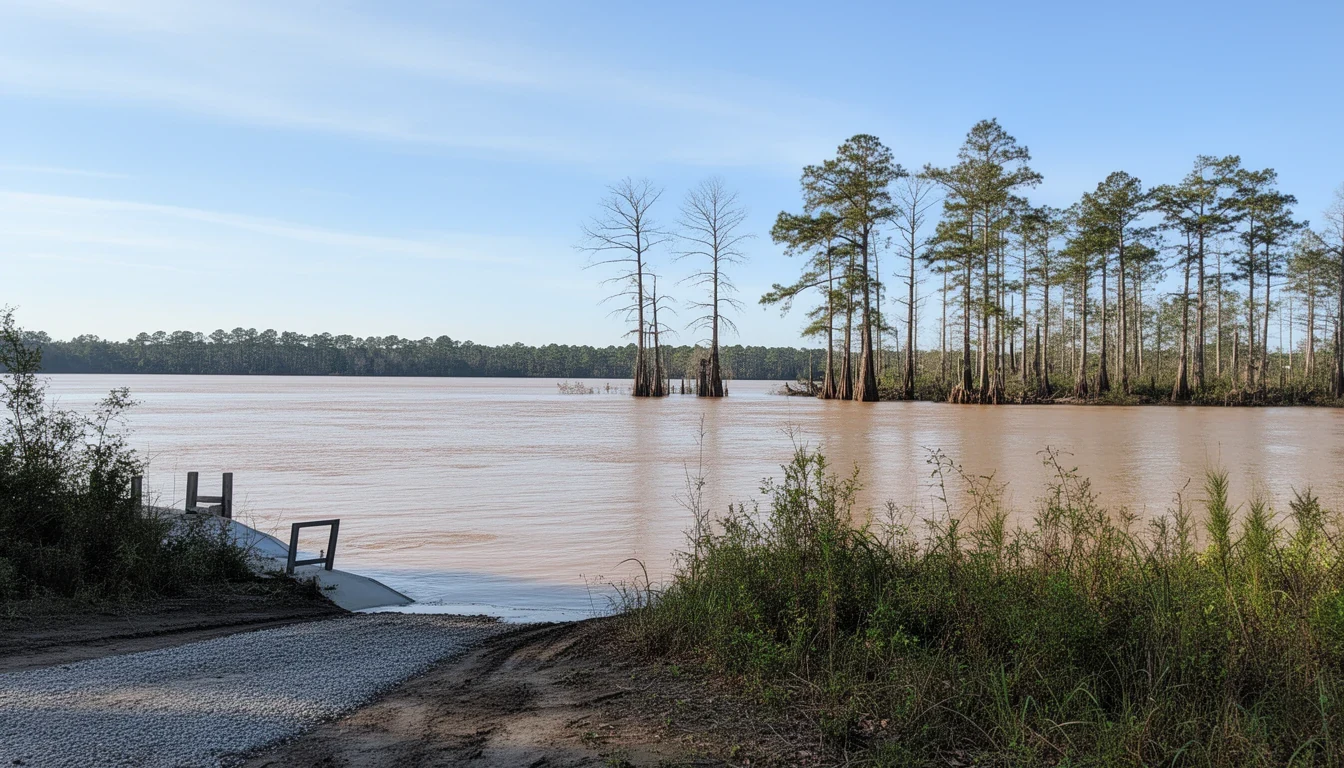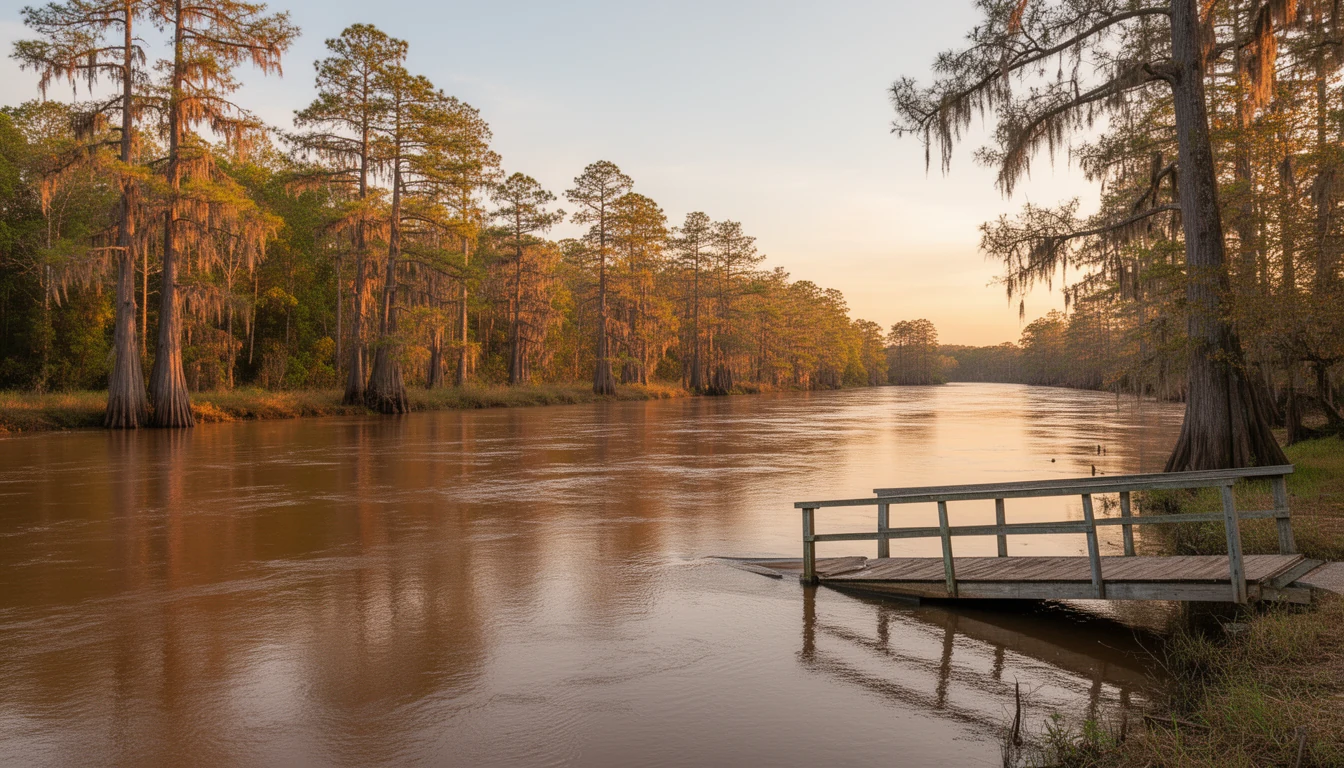


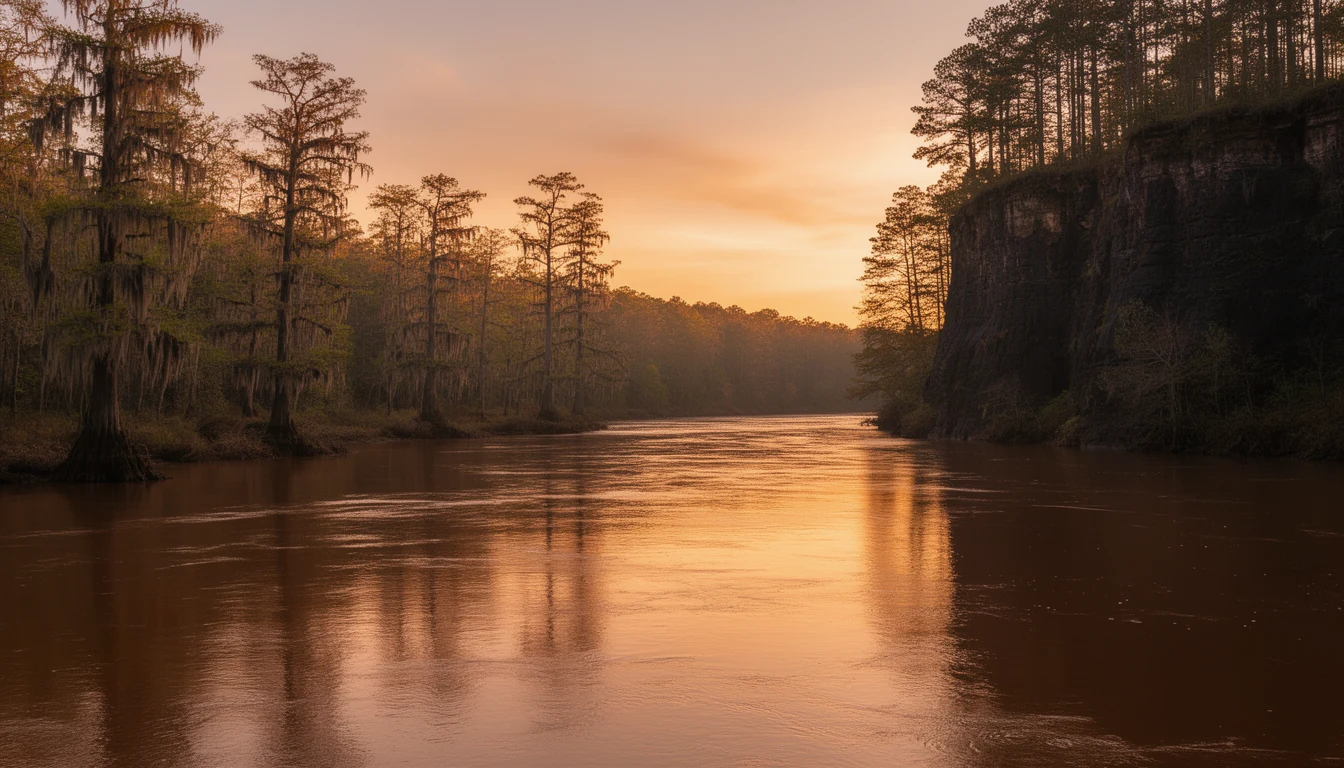
Stand on the bluff at Rainbow Banks and the Roanoke does the talking. Seventy feet below, the water curls around a wide bend, slow and brown, cypress lining the far bank. Wind moves through the pines and the old cannon mouths point downriver at nothing in particular. It is easy to stand here in the quiet and miss that this stretch of river was once the front line of a war.
Fort Branch sits three miles south of Hamilton, off NC 125 at Fort Branch Road, and it is one of the best-preserved Confederate earthworks in the South. Construction started in October 1862 on orders from the Confederate government, and the fort was finished early in the summer of 1863. It was named for General Lawrence O’B. Branch, a North Carolinian killed at the Battle of Sharpsburg, which most people know as Antietam.
Why the fort sat here
This bend mattered because of the railroad. Union gunboats controlled the mouth of the Roanoke by early 1862, and the Wilmington and Weldon Railroad was the Confederacy’s lifeline between the port at Wilmington and Richmond. The bridge over the Roanoke at Weldon was the weak link, and Rainbow Banks, with its 70-foot bluff and long sightline downriver, was the obvious place to defend it. Companies B, G, and H of the 1st North Carolina Artillery manned the fort.
The fort had a second job most visitors never hear about. Just downriver at Edwards Ferry, crews were building the ironclad ram CSS Albemarle, and Fort Branch stood guard over that construction site. The Albemarle would go on to help Confederate forces recapture Plymouth in 1864 and hold the lower river until she was sunk that October.
The war that mostly passed it by
For all the firepower, Fort Branch rarely saw a real fight. Work on the fort slowed in December 1862 when a raid under General J. G. Foster moved through the area. The fort’s biggest test came in December 1864, when a joint Union army and navy force moved against it from Plymouth. The attempt failed, and the defenders held the bend. In the spring of 1865, with the war clearly lost, the garrison destroyed the fort themselves: they exploded the magazine and dumped the guns into the river.
What’s there now
That is where the modern story starts. In the decades since, eight of the fort’s original cannons have been pulled out of the Roanoke and put back in place, and the Fort Branch Historical Society says that makes this the only earthwork fortification in the South with its original artillery on site. You can walk the rebuilt gun emplacements, see a restored steam engine from the steamer Ranger, and look at Native American pottery from Hoggtown, an eighteenth-century river community nearby. The reconstructed winter quarters of the 1st NC Volunteers sit outside the walls, and a battle re-enactment is held the first weekend in November, with a candlelight Civil War Christmas on the first Saturday in December.
What living near it means
For a buyer, Fort Branch is not just a day trip; it is the reason the land around Hamilton has its own sense of depth. You are buying into a river bend that people have defended, farmed, and built on for two centuries, and that history is part of why the quiet feels different. The trade-off is the one the Hamilton chapter lays out plainly: the county seat at Williamston has grocery stores, Wal-Mart, and schools, and Hamilton is a drive from all of it. What you get in exchange is a slower pace, a river you can put a boat in at the public ramp, and an earthwork fort within sight of the water that has been waiting 160 years to be your backyard landmark.