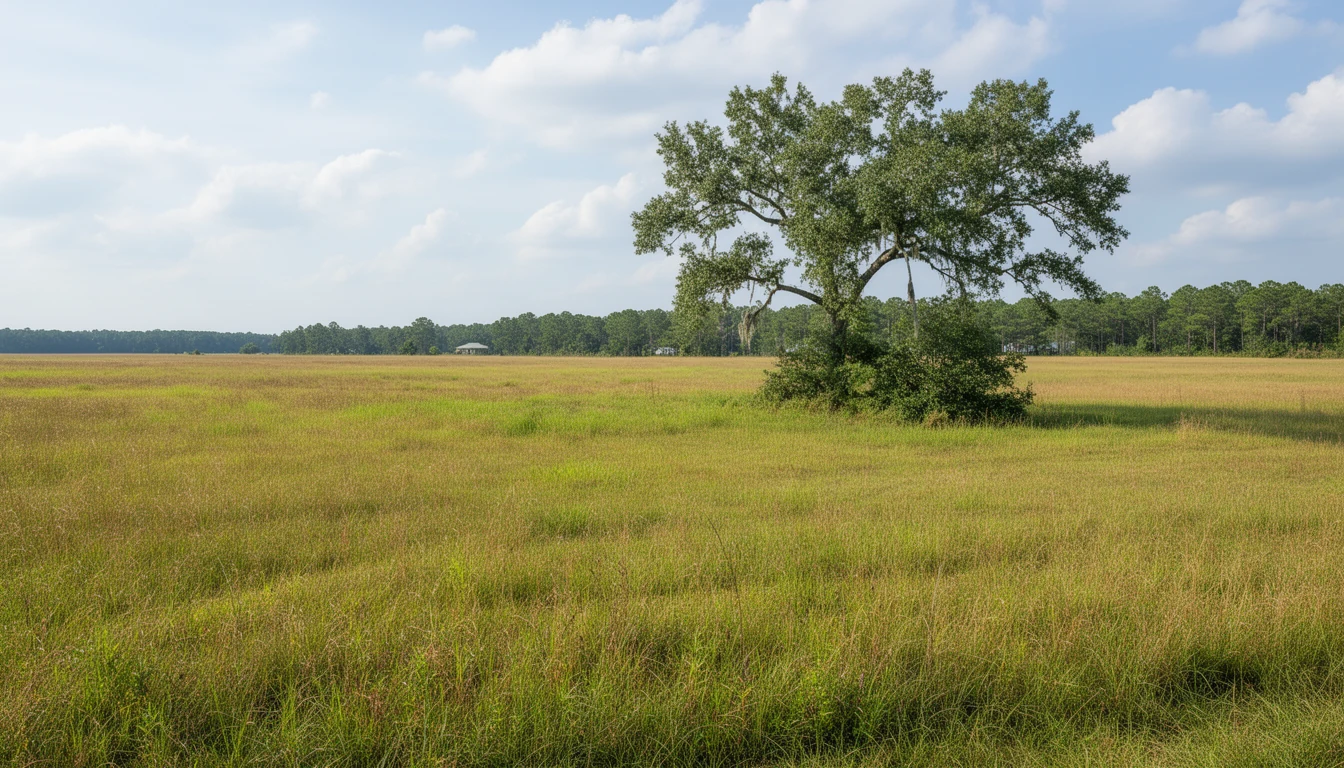



Buying farmland isn’t like buying a house. The soil under your feet, the water running through it, and the government programs tied to the land can matter more than what’s sitting on top. Martin County’s agricultural land — more than 110,000 acres of it — is a completely different asset class from residential real estate, and the buying process reflects that.
Here’s what every farmland buyer needs to understand before making an offer.
Start with the Soil — USDA Web Soil Survey
The single most valuable tool for evaluating farmland is free, online, and funded by your tax dollars. The USDA Natural Resources Conservation Service’s Web Soil Survey (WSS) contains detailed soil data for every acre of Martin County.
Visit websoilsurvey.nrcs.usda.gov, set Martin County as your Area of Interest, and you’ll get an interactive map showing every soil type on the property. The key ratings to check:
Farmland classification. The WSS assigns each soil type as Prime Farmland, Farmland of Statewide Importance, or Not Prime Farmland. This designation directly affects value, financing, and development potential.
Drainage class. Martin County’s coastal plain soils range from well-drained (Goldsboro and Norfolk series on uplands) to very poorly drained (Ponzer and Scuppernong organic soils in pocosins and swamps). Most farmland here has somewhat poorly to poorly drained soils — drainage improvements are the norm, not the exception.
Crop yield estimates. The survey generates estimated yields for corn, soybeans, wheat, and other crops by soil map unit. This is the closest thing to a productivity scorecard for raw land.
The major soil associations you’ll encounter in Martin County include Goldsboro and Norfolk (prime farmland on uplands), Lynchburg and Rains (poorly drained flats), and the organic soils of the Tidewater pocosins.
Drainage: The Hidden Infrastructure
Flat topography and a high water table define the Tidewater region. Without artificial drainage, much of Martin County’s farmland would be too wet for row crops. The drainage systems already in place — or the lack of them — are a major factor in land value.
Surface ditches are the most common system: open channels graded across fields, typically spaced every 100 to 300 feet. Tile drainage (perforated tubing buried 2 to 4 feet deep) is more expensive — roughly $500 to $1,500 per acre to install — but more effective for row-crop production. Many older fields in the county still have clay tile systems installed decades ago, some of which are now failing.
Water control structures (flashboard risers) let landowners manage the water table actively — draining before planting or harvest, retaining water during dry spells. These are increasingly common on well-managed coastal plain farms.
What to ask the seller: Is the property currently drained? How old is the tile system? Are there drainage easements or ditch maintenance agreements with neighbors? The county NRCS office and Farm Service Agency may have pattern-tile maps showing where subsurface drainage exists.
CRP Contracts: What Buyers Need to Know
The Conservation Reserve Program (CRP) is a voluntary USDA program that pays landowners to remove environmentally sensitive land from production and establish conservation covers. For Martin County farmland buyers, CRP matters because contracts run with the land.
When you buy a property that’s enrolled in CRP, you generally take over the contract (with FSA approval). That means you inherit both the annual rental payment and the obligation to maintain the conservation practice.
Contract terms run 10 to 15 years. Annual rental payments are based on soil productivity — in Martin County’s coastal plain, expect rates roughly in the $50 to $90 per acre range depending on soil quality. Continuous CRP and the NC Conservation Reserve Enhancement Program (CREP) in the Tar-Pamlico watershed offer additional incentives: one-time signing payments up to $150 per acre and cost-share assistance up to 50% of establishment costs.
The key question: Is the land enrolled because of genuinely marginal cropland that’s better suited for conservation, or was it put into CRP as a land-banking strategy? The answer tells you a lot about the property’s true agricultural potential.
Due Diligence: It’s Different for Land
North Carolina’s residential due diligence process applies to farmland too, but the checklist is longer. Beyond the standard title search (critical in Martin County, where heirs’ property is common) and survey, you’ll need:
Soil and septic evaluation. If there’s a building site, the percolation test determines whether it can support a septic system. Not all soils pass.
Wetland delineation. Federal and state wetland regulations (Clean Water Act Section 404, CAMA in the Tidewater zone) can restrict what you can do with wet areas. A wetland delineation tells you where you can farm and where you can’t.
FSA farm records check. The current owner’s farm tract number with USDA is a direct line to history: base acreage, payment eligibility, CRP contracts, and any prior drainage assistance. This is the single most informative document a farmland buyer can request.
Heirs’ property alert. A significant portion of rural land in eastern NC — particularly in Martin County — has passed down through families without formal probate. The result is clouded title: multiple partial owners, some of whom may be deceased or unlocatable. A good title search will reveal this, but it can take months to clear through partition proceedings. Don’t skip title insurance.
Martin County Land Values (Approximate)
Per-acre pricing varies dramatically by soil quality, drainage, timber, and access. Current estimates for Martin County:
- Row-crop farmland: $3,000–$6,000 per acre for productive, well-drained soils
- Timberland: $1,500–$4,000 per acre, depending on timber stocking and species
- Pasture/hayland: $2,500–$5,000 per acre, depending on improvements
- Wetland/pocosin: $500–$1,500 per acre, limited agricultural value
These are informed estimates based on coastal plain NC land values, not verified current appraisals. Rural land is highly localized — two adjacent tracts can differ by 2:1 in value based on soils, drainage, and timber. Always verify with current MLS data and a licensed appraiser.
The Bottom Line?
Farmland is a specialized asset that rewards buyers who do their homework before writing the offer. Start with the Web Soil Survey. Check the drainage. Understand any CRP contracts. Get a title search and FSA farm records. Martin County’s agricultural land offers genuine opportunity — the county’s Tier 1 economic development status and affordable per-acre pricing make it one of the more accessible farmland markets in eastern NC. But “accessible” doesn’t mean casual. The buyers who succeed are the ones who treat farmland like what it is: a working asset with its own rules, its own risks, and its own rewards.
Information deemed reliable but not guaranteed. Verify all details — particularly CRP rental rates, per-acre pricing, and USDA program eligibility — with a qualified professional and current market data before making any purchase decision.