
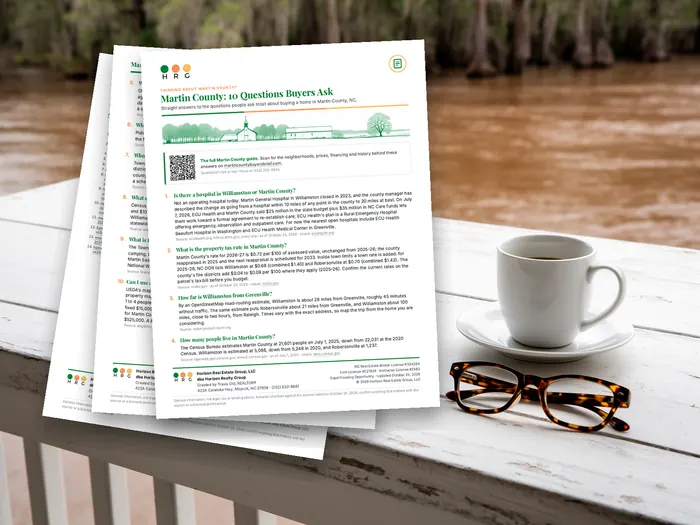
8 Hidden Costs of Rural Homeownership the MLS Never Lists

In this post
- 1. The well is yours, all of it
- 2. Septic is a permit before it’s a tank
- 3. Your road may not be the state’s road
- 4. The drive is a line in the budget
- 5. Insurance arrives as two bills
- 6. Heat, water and power run on your dime
- 7. Land asks for equipment and Saturdays
- 8. The homework you pay for before you own anything
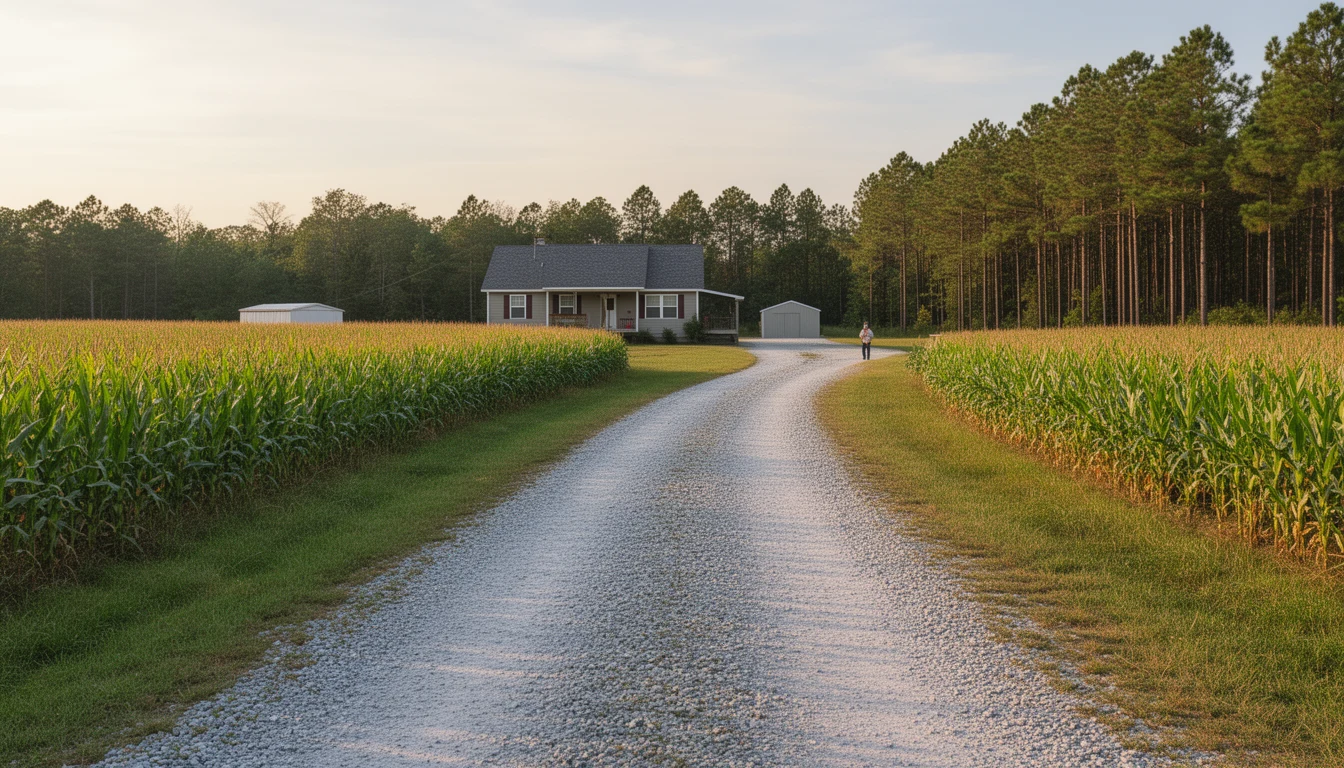
The well pump kicks on before you hear anything else. Standing at the end of a gravel drive off a county road outside Williamston, that low hum is the sound of a house running on its own systems: water drawn from a hole in the ground, waste settling into a tank in the yard, heat burning off a tank beside the wall.
A listing sheet gives you a price. It doesn’t give you what the price leaves out. Here are eight costs rural buyers in Martin County meet in the first couple of years, with the honest trade on each one.
1. The well is yours, all of it
No water bill out here, and no water department to call either. The well and everything attached to it belong to you: pump, pressure tank, treatment equipment. North Carolina public health guidance calls for testing a private well for total and fecal coliform bacteria every year, and for nitrates, nitrites, lead, copper, and heavy metals every two years. Near the Roanoke, a shallow well draws from a water table the surface can influence, so getting a bacteria and nitrate test before closing isn’t optional.
The trade cuts both ways: you skip a monthly bill you would pay in town, and you carry every repair a utility would have carried for you.
2. Septic is a permit before it’s a tank
Wastewater permits for Martin County come from the Martin-Tyrrell-Washington District Health Department. A vacant lot needs a soil evaluation and an improvement permit before anyone digs. Flat, low ground along the river often carries poorly drained soils and a high water table, which can push a lot from a conventional system into an engineered one: low-pressure pipe or sand-lined, costing more to install and more to keep running. Then there’s the pump-out schedule, and one rule that never bends. You don’t pave over a drainfield.
3. Your road may not be the state’s road
Plenty of tracts off the main highways sit on private roads. The state doesn’t grade them, and nobody sends a crew after a hard rain. Ask for the recorded maintenance agreement and what the cost-sharing looks like. Ask whether the road has ever washed out, and how often. A quarter mile of gravel re-graded after a wet winter is an invoice with your name on it.
4. The drive is a line in the budget
Williamston to Greenville runs about 28 miles and 45 minutes on Prison Camp Road and NC-903. Fuel, tires, oil changes, brakes: all of it moves faster when every errand is a round trip. If you go to town twice a week, this cost is nothing. If you drive it daily, it’s a second vehicle. US-17 and US-64 make the long trips easy. They don’t make them short.
5. Insurance arrives as two bills
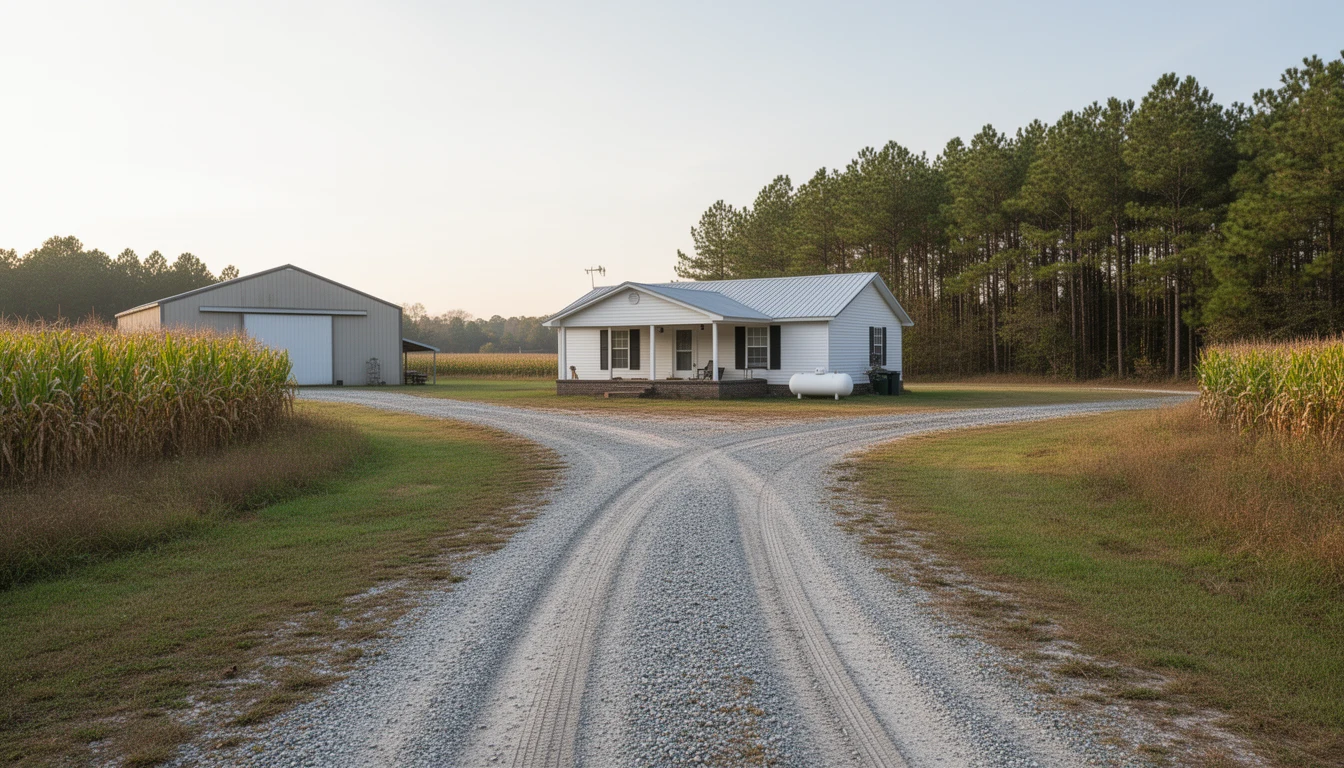
Flood insurance is a separate policy from homeowners insurance, and on a tract inside a mapped floodplain that policy is a yearly bill you plan for rather than a surprise. Wind and hail coverage deserves its own question in eastern North Carolina, where some carriers write that deductible as a percentage of your dwelling coverage instead of a flat amount. Ask your agent how the deductible is structured, not only what the premium costs.
6. Heat, water and power run on your dime
Heat in a rural Martin County house usually means propane or a heat pump, and the well pump runs on electricity. A storm that takes down the line takes your water with it, so a generator or a plan belongs in the budget. Check internet service at the specific address too. Broadband reach varies parcel to parcel in this county, and a hotspot or satellite plan is a monthly cost a town buyer never sees.
7. Land asks for equipment and Saturdays
A lot in town takes a push mower and an afternoon. Acreage takes a tractor or a zero-turn, or a bush-hogging contract, plus fence lines, brush, and limbs down after every summer storm. Property you love being on is property you work on. Budget the machine, or budget the hours.
8. The homework you pay for before you own anything
Survey, soil evaluation, well yield test, timber cruise, flood map, permit records: some of that money goes toward land you decide not to buy, and none of it comes back. Once you do own it, there’s no landlord and no super. Trades in a small county are booked out, so a well pump that quits on a Friday is your Friday.
None of this should talk you out of the country. It should change the number you carry into an offer and what you keep in reserve afterward. The dirt is the easy part to price. The systems under it decide whether the first year feels like a home or a project.
Travis Old works this county with Horizon Realty Group. He’ll pull the well and septic permit history on the parcel, then walk the flood map and price the systems alongside the land before you write an offer. Call him at (252) 632-8681.
Keep reading
Rural Internet in Martin County: 7 Checks Before You Buy
Seven checks that settle whether a Martin County address gets usable internet, from FCC maps and state fiber projects to the seller's own bill.
6 Things to Check Before Buying Rural Land in Martin County
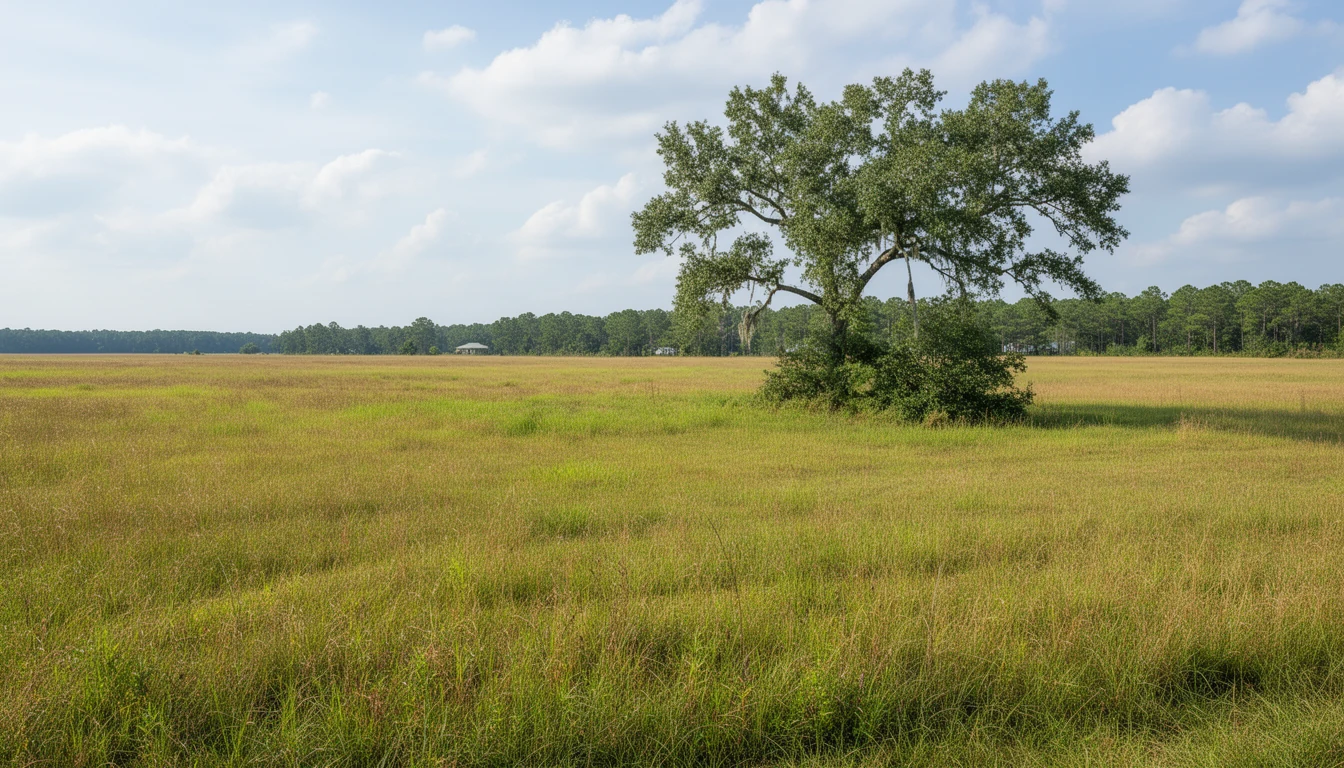
Six practical checks before buying your rural land in Martin County: road access, well water, septic, flood maps, ag zoning, and timber value.
Martin County Contracts: The Cost of Walking Away
A 2022 NC Supreme Court ruling confirmed buyers who breach a purchase contract can owe attorney's fees. What that means for Martin County buyers.