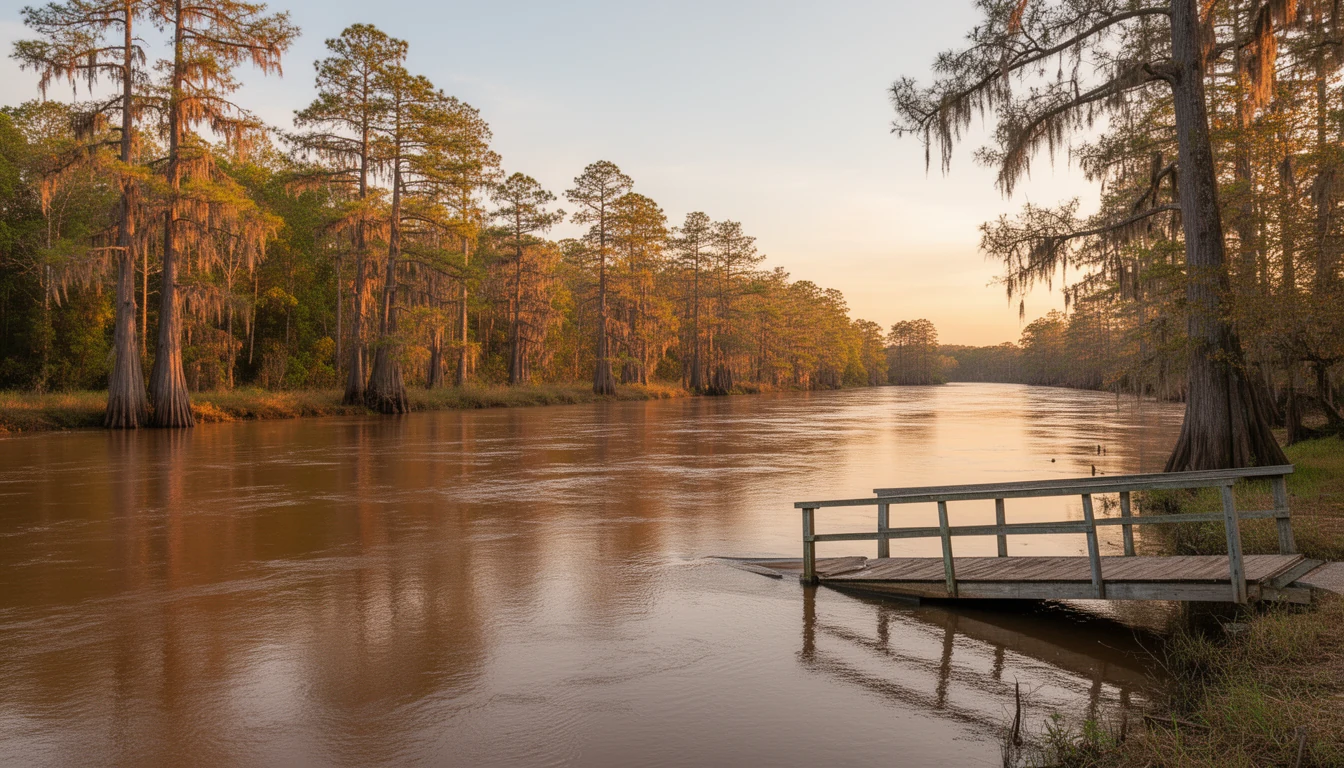


I am standing at the Williamston Boating Access Area on River Road on a September morning, and the Roanoke is running low and calm the way it does in late summer. A family is unloading kayaks at the canoe access. A fisherman on the pier is working the edge of the channel. Nothing about this scene appears in an MLS listing, but it is the reason a lot of buyers end up in Martin County at all. Here are the five river experiences that sell this place better than any listing photo.
Paddle-In Camping Platforms on the Roanoke River Paddle Trail
The Roanoke River Paddle Trail is a long-distance canoe and kayak trail with dozens of paddle-in camping platforms, running from near Roanoke Rapids down toward the Albemarle Sound. Martin County’s stretch of the river feeds directly into it. From the Astoria Landing ramp in Jamesville, the Barred Owl Roost platform sits a few miles up Devil’s Gut, a large side channel of the river. Put in at the Williamston ramp and the Conine platform is roughly six miles downstream, an easy day paddle with a dry place to sleep at the end. These platforms are public, reservation-based camping on the water, and they are what most river-adjacent counties in eastern NC simply do not have.
Moratoc Park, Where Williamston’s River Wharf Used to Be
Moratoc Park is an 18-acre, county-owned park on the Roanoke River at the site of Williamston’s original river wharf, where goods once moved in and out of town by water. Today it holds a river overlook, a fishing pier with ADA-accessible rails, a canoe and kayak launch, and the Moratoc event building, a renovated space with a full kitchen and a deck over the water. A one-room schoolhouse and a former lumber mill commissary still stand on the grounds. It is an everyday amenity, not a weekend destination, and it is walkable from many in-town Williamston neighborhoods.
The Skewarkee Rail Trail From Downtown to the Water
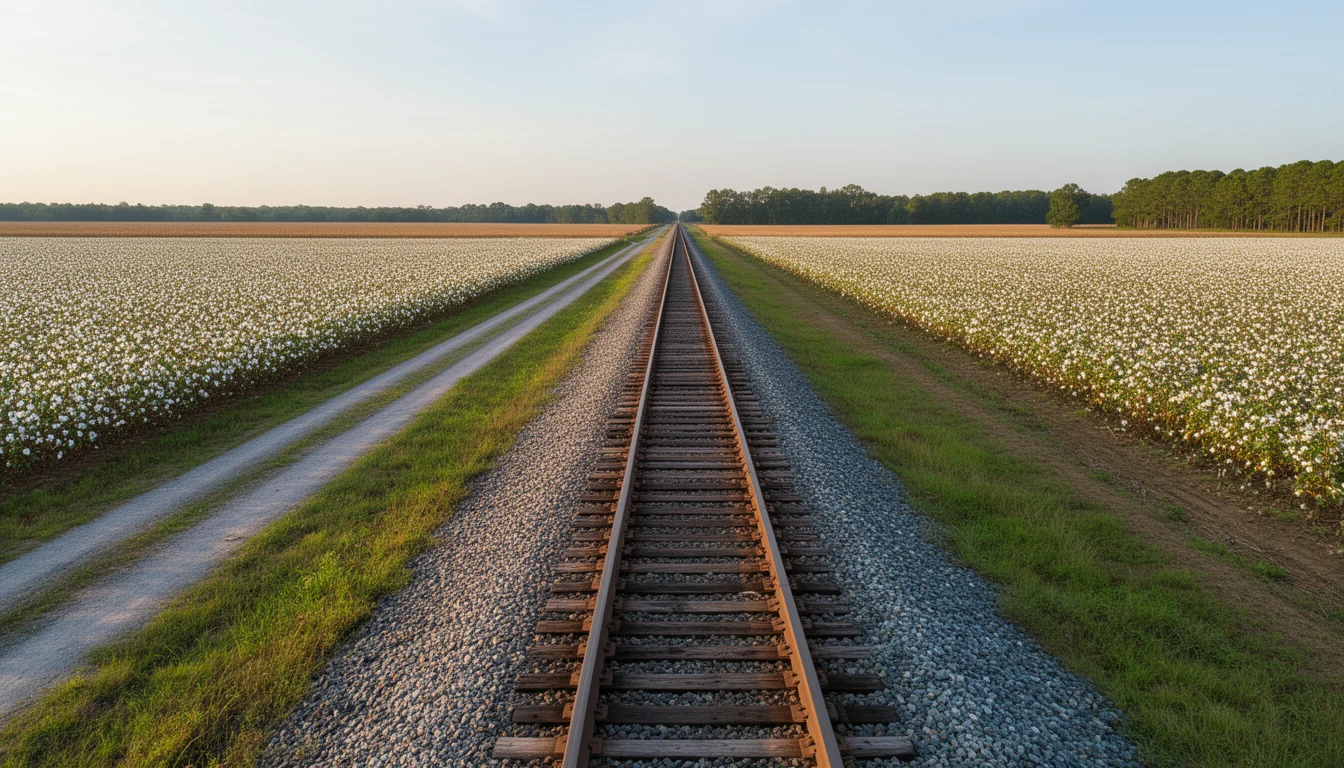
The Skewarkee Rail Trail is a paved, 0.93-mile multi-use path built on a former Atlantic Coast Line rail corridor, running from near Washington Street in downtown Williamston out to the river at the NC Wildlife boat landing on River Road. It ties directly into Moratoc Park at its riverside end, so it functions as the walking and biking route between in-town Williamston and the water. Locals use it daily: walkers, joggers, cyclists, and inline skaters. For a buyer looking at a downtown-adjacent home, the trail is the kind of amenity that shows up in the routine, not just the brochure.
Fishing the Blackwater Stretch, Year Round
The famous spring striped bass run on the Roanoke is real, but its heart sits well upstream around Weldon and Roanoke Rapids. Down in Martin County, anglers work a slower, blackwater-influenced stretch that is more about largemouth bass, catfish, crappie, and bream, with some striper passing through seasonally. That is a solid, unglamorous, year-round fishery rather than a single marquee event, and it is worth knowing the distinction before you buy expecting to be in the middle of the famous run. Anyone 16 or older needs an NC inland fishing license, roughly $30 a year for residents and $54 for nonresidents, and July 4th is a free fishing day statewide.
The Roanoke River National Wildlife Refuge, Reached From Martin County Ramps
The refuge protects roughly 20,978 acres of bottomland hardwood forest, established in 1991 to preserve one of the largest intact, least-disturbed bottomland ecosystems left in the mid-Atlantic. Its core tracts sit primarily in Bertie County, downriver of Williamston, but Martin County’s own ramps are the practical way in: the Williamston boat ramp serves as a put-in for longer downriver trips toward the refuge’s camping platforms, and the refuge supports one of the highest densities of nesting songbirds anywhere in North Carolina. None of it requires owning refuge-adjacent property, it is public water reached from public ramps in Martin County towns.
The Bottom Line
Five experiences, all public, all reachable from Martin County launch points, none of which show up in the photos of a house for sale. The honest trade-off is the usual one: immediate river frontage costs more and carries flood-insurance overhead, while an in-town home a short walk or drive from a ramp gets you the same river without owning the risk. If the water is the reason you are looking, spend a weekend on the paddle trail or a morning on the Skewarkee Trail before you write an offer. The river will tell you which buyer you are.